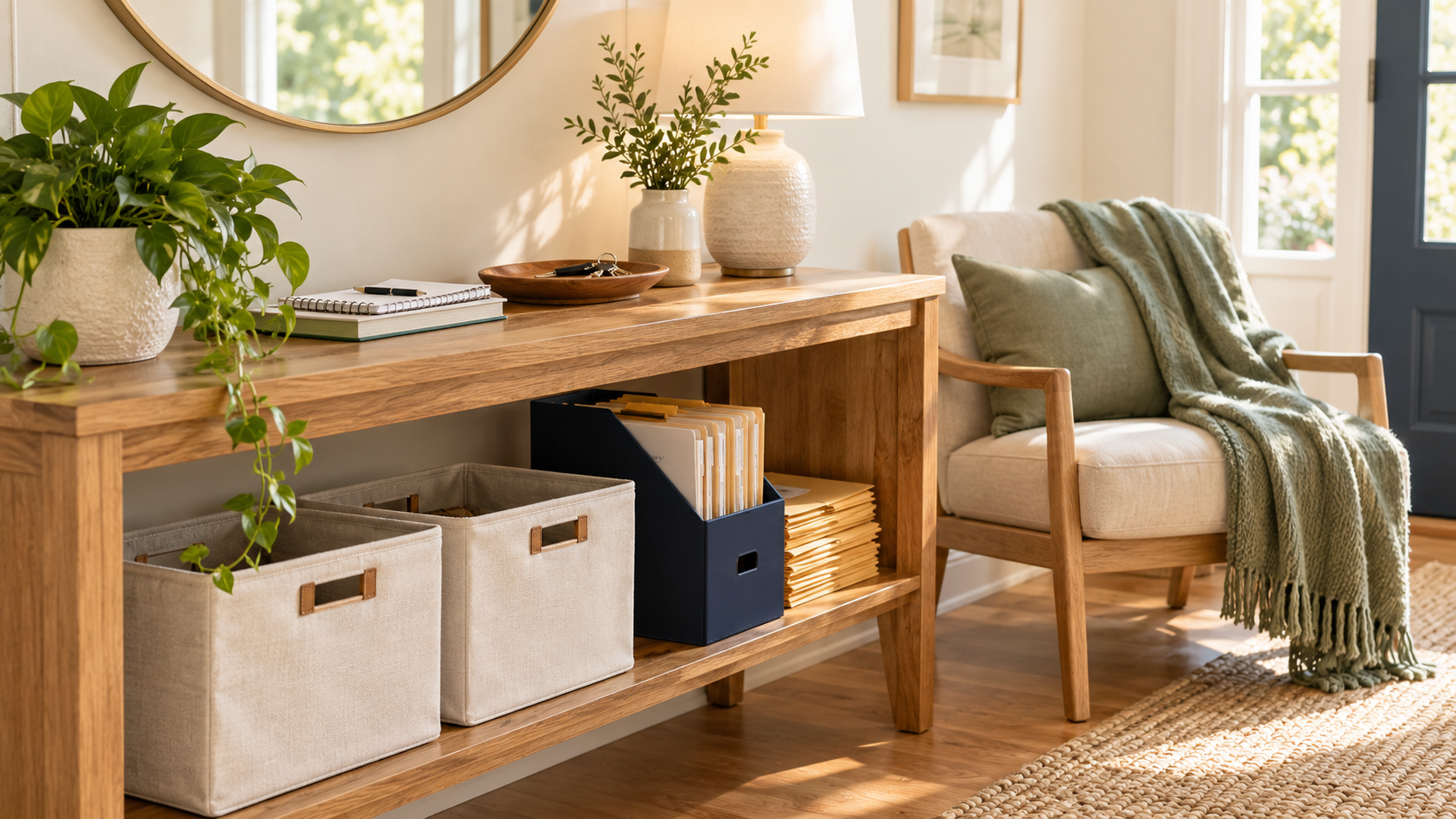
Small steps. Big difference. A more organized home, a calmer mind, and a happier you.
If your home has felt a little cluttered, scattered, or just plain annoying lately, you’re not alone.
Sometimes the mess isn’t outrageous. It’s just enough to make daily life feel harder than it needs to.
A junk drawer that won’t close. A pantry full of things nobody can find. A garage that looks like it might contain both Christmas decorations and a missing civilization.
The good news?
You do not need to reorganize your entire life this weekend.
You just need a few small wins.
Here are 10 practical areas to organize that can make your home feel calmer, cleaner, and easier to live in.
1. Closet
Closets fill up fast with clothes we don’t wear, shoes we forgot we owned, and random items that somehow ended up there because we were “putting them away for now.”
Take a little time to sort through one closet.
- Remove clothes you no longer wear.
- Set aside anything that no longer fits or serves you.
- Group similar items together.
- Keep what you actually use and love.
Quick tip: If you haven’t worn it in a long time, it’s probably not your favorite anymore.
2. Kitchen Drawers
Kitchen drawers can go from organized to chaotic in record time.
Utensils get mixed together, duplicates pile up, and before you know it, you’re digging through three spatulas and a mystery gadget just to find a can opener.
This weekend, pick one or two kitchen drawers and:
- Remove everything.
- Toss broken or unnecessary items.
- Group similar utensils together.
- Use dividers if helpful.
Quick tip: You probably do not need six vegetable peelers. Unless you’re running a potato festival.
3. Pantry
A disorganized pantry makes cooking more stressful and grocery shopping more confusing.
Start by checking expiration dates, duplicate items, open packages, and foods you no longer use.
Then organize everything into categories. Keep baking products together, vitamins in their own designated area, cereals in another, and snacks where everyone can find them.
We really like using organizational bins.
Bins keep similar items together and contained. They’re especially convenient because you can grab an entire bin of snacks or spices, take everything off the shelf at once, find what you need, and slide the whole bin right back into place.
Another favorite? Lazy Susans.
They’re fantastic for sauces, cooking oils, vinegars, and other bottles that tend to get lost in the back of the pantry. Give one a spin instead of moving six bottles to reach the one you want.
Quick tip: Group items by how you actually use them, not just how they look. A practical pantry beats a picture-perfect pantry every time.
4. Bathroom
Bathrooms collect clutter too—half-used products, old toiletries, expired items, and things shoved in drawers because there was nowhere else to put them.
Choose one bathroom area and:
- Remove expired products.
- Throw away empty containers.
- Wipe down shelves and drawers.
- Keep everyday essentials neat and accessible.
Quick tip: Organizing the bathroom is one of those jobs that never sounds exciting but always feels good when it’s done.
5. Garage
The garage. A place where things sometimes seem to go and die.
Old tools, broken equipment, empty boxes, unused sports gear, and random items that somehow became permanent residents.
Chances are, there’s quite a bit in there you don’t actually need anymore.
Start there.
Before buying shelves, bins, or storage racks, go through one section and figure out what you can get rid of.
- Throw away things that are broken beyond repair.
- Set aside usable items to donate or sell.
- Group tools, sports equipment, and seasonal supplies together.
- Create designated spots for the things you’re keeping.
- Keep walkways clear and store hazardous materials safely.
You don’t have to reorganize the entire garage in one weekend. Just reclaim one section.
Quick tip: Getting rid of unnecessary stuff before organizing the rest means you’ll have less to store—and possibly discover that you already have enough shelving.
6. Paperwork
Paper piles create stress fast.
Bills, school forms, manuals, receipts, insurance documents, and random papers all seem small—until they become a mountain.
Here’s a simple approach that works well for us:
Manila envelopes and heavy-duty, quick-setup storage boxes.
Manila envelopes are great for keeping related documents together. Label them by category—taxes, insurance, medical records, warranties, household paperwork, or whatever makes sense for your family.
Then place the envelopes inside sturdy storage boxes that are easy to assemble, label, and access.
You can sort paperwork into:
- Bills and financial records.
- Important personal documents.
- Tax-related paperwork.
- Manuals and warranties.
- Papers to recycle or securely shred.
There’s no need for an elaborate filing cabinet if a few labeled envelopes and boxes do the job.
You can also scan appropriate documents and reduce unnecessary paper clutter, while securely storing originals that need to be kept.
Quick tip: A simple filing system that you’ll actually use is much better than an expensive one you won’t.
7. Junk Drawer
Let’s be honest.
The junk drawer is rarely junk-free.
It usually contains batteries, pens, tape, clips, takeout menus, rubber bands, receipts, mystery cords, and possibly one item that belongs in every room of the house.
Go through it and:
- Throw away actual trash.
- Remove items that belong elsewhere.
- Group useful items together.
- Keep only what you really need.
Quick tip: A junk drawer is fine. A junk drawer with standards is even better.
8. Car
Organizing the car can be a pain, especially if it’s been collecting sports equipment, wrappers, papers, toys, and other miscellaneous items for months.
Here’s a method that really helps.
It stinks to do it, but take everything out of the car first.
Everything.
Empty the trunk, center console, glove box, door pockets, and any other storage areas.
Then clean the interior and start putting things back where they belong.
I guarantee you’ll find that a lot less goes back into the car than what came out.
As you put things back, think about what you actually need:
- Registration and insurance information.
- A phone charger.
- Tissues or wipes.
- A small emergency kit.
- A designated place for everyday necessities.
Keep loose objects secured so they don’t become hazards during a sudden stop.
Quick tip: Give yourself a clean slate. It’s much easier to keep the car organized when you aren’t constantly shifting clutter from one seat to another.
9. Digital Files
Not all clutter is visible.
Digital clutter can be just as frustrating as physical clutter.
Messy desktops, packed downloads folders, duplicate photos, and random files can make your devices harder to use.
This weekend, spend a little time to:
- Organize photos.
- Clean up files.
- Delete what you no longer need.
- Create a few simple folders.
Make sure important files are backed up before deleting copies.
Quick tip: If your computer desktop looks like a yard sale, this is your sign.
10. A Space Just for You
This one matters.
Not every space you organize has to be about productivity.
Create one clean, comfortable space that feels peaceful to you.
It could be:
- A chair and small table.
- A reading corner.
- A prayer space.
- A place to journal.
- A quiet area to sit and breathe.
The point is to create a small area where you can relax, refresh, and recharge.
Quick tip: A more peaceful you is good for everyone around you too.
The Extra Mile: Weekend Organization Reset
If you want to turn this into a practical weekend win, don’t try to do all 10.
Pick three.
That’s enough to create momentum without making yourself miserable.
Weekend Organization Checklist
- ☐ Closet
- ☐ Kitchen drawers
- ☐ Pantry
- ☐ Bathroom
- ☐ Garage
- ☐ Paperwork
- ☐ Junk drawer
- ☐ Car
- ☐ Digital files
- ☐ A space just for you
My top 3 this weekend:
- __________________________
- __________________________
- __________________________
One area that already feels better:
__________________________
Final Thoughts
Clearing clutter brings a wonderful mix of relief, calm, and mental clarity.
There’s something satisfying about walking into a room, opening a drawer, or getting into your car and seeing everything in its place.
And here’s another benefit: you might even put a little money in your pocket.
Some of those things you no longer need could be sold. Others could be donated to someone who can actually use them.
Making a little extra money feels great. So does knowing that something you no longer need might help someone else.
Right?
Organizing your home isn’t about impressing anyone or creating a picture-perfect house.
It’s about making everyday life simpler, calmer, and more manageable.
Start small. Pick a few areas. Keep it practical.
Small steps really can make a big difference.
Command & Simplify
