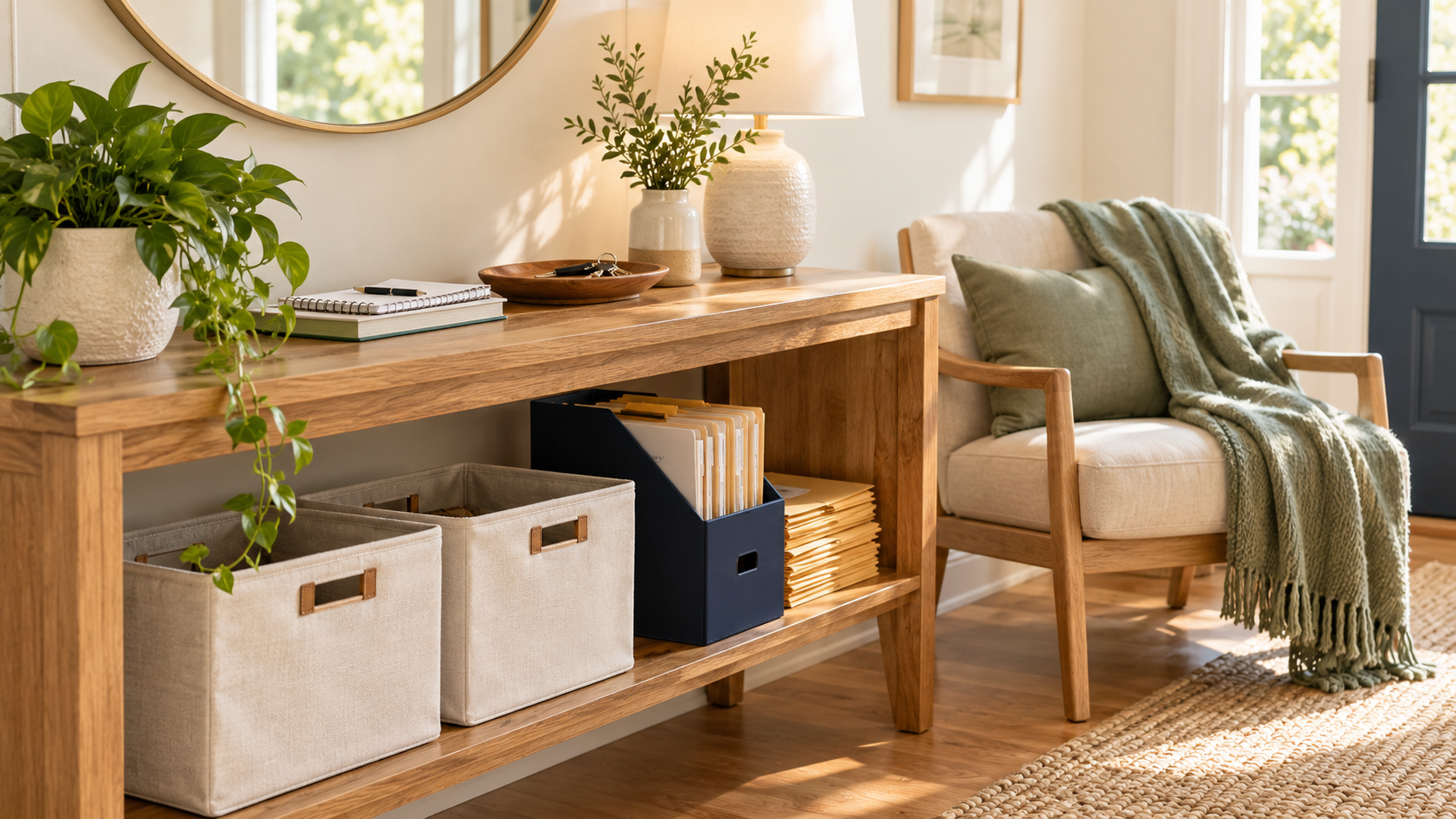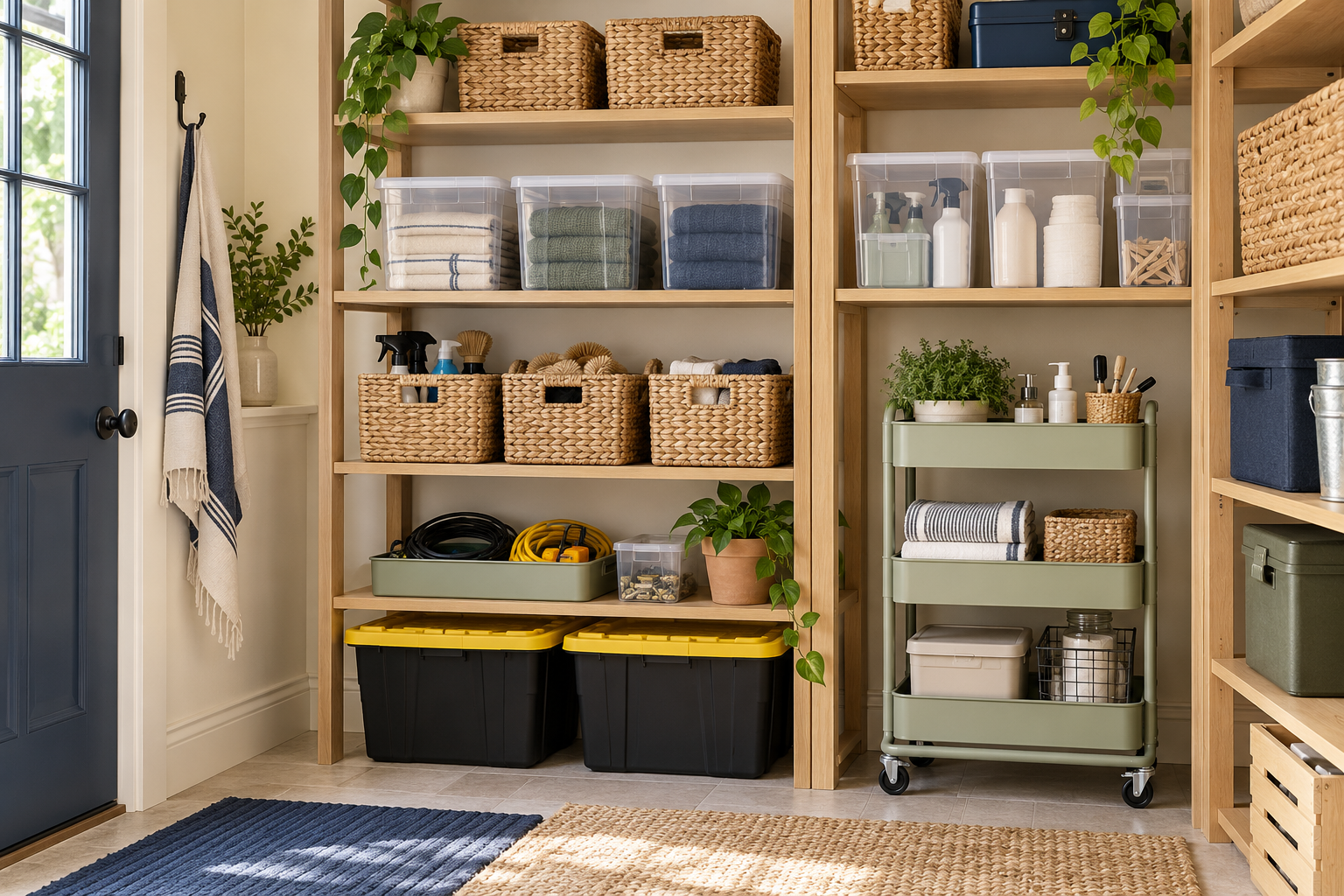
Simple solutions. Less clutter. More space. A calmer home.
Ever notice how clutter seems to multiply when nobody’s looking?
One day, the kitchen counter is clear. The next, it’s covered with mail, school papers, keys, and things that don’t seem to belong anywhere.
The garage becomes a storage museum. Kitchen drawers turn into archaeological digs. And somewhere in the house is a charging cable that fits absolutely nothing you own.
Sound familiar?
The good news is that organizing your home doesn’t require expensive renovations, custom closets, or hundreds of matching containers.
Sometimes a few well-chosen products can make everyday life a whole lot easier.
But here’s something important: Don’t buy organization products just to organize things you don’t need.
Start by getting rid of unnecessary clutter. Then figure out which products will actually help you make better use of the space you have.
Here are 14 practical home organization products worth considering.
1. Clear Storage Bins
Clear storage bins are one of the simplest ways to organize closets, cabinets, shelves, and storage areas.
Their biggest advantage? You can see what’s inside without opening every container.
They’re great for seasonal clothing, holiday decorations, craft supplies, toys, and household extras.
What to look for:
- Sturdy construction.
- Stackable designs.
- Secure-fitting lids.
- Sizes that fit your available shelves.
- Clear sides so contents remain visible.
Quick tip: Measure your shelves before purchasing bins. Buying 10 containers only to discover that none of them fits is a pretty frustrating way to get organized.
2. Drawer Organizers
Everybody has a drawer that could use a little help.
Kitchen utensils, office supplies, bathroom products, and miscellaneous household items have a way of getting mixed together.
Drawer organizers create designated spaces for everything.
Adjustable dividers are particularly useful because they let you customize the layout.
What to look for:
- Adjustable compartments.
- Easy-to-clean materials.
- A secure fit inside your drawer.
- Enough space for the things you actually use.
Quick tip: Empty the drawer and sort its contents before buying an organizer. You may discover you need fewer compartments than you thought.
3. Under-Sink Organizers
The cabinets underneath kitchen and bathroom sinks are often awkward spaces.
Pipes, disposal units, and plumbing fixtures can make ordinary shelving difficult.
That’s where adjustable under-sink organizers can be helpful.
Sliding shelves and two-tier organizers can make cleaning supplies and household essentials easier to access.
What to look for:
- Adjustable height and width.
- Moisture-resistant materials.
- Pull-out shelves or baskets.
- Enough clearance around existing plumbing.
Quick tip: Measure around your pipes before ordering anything. Also, keep cleaning chemicals and potentially hazardous products secured away from children and pets.
4. Label Maker
A label maker might seem unnecessary until you start organizing storage containers, paperwork, pantry shelves, or garage bins.
Labels make it easier to find things—and, more importantly, put them back where they belong.
They can be especially helpful in households where several people use the same storage areas.
What to look for:
- Easy-to-read labels.
- Affordable replacement tape.
- Simple controls.
- Label materials appropriate for the surface and environment.
Quick tip: You don’t necessarily need an electronic label maker. A permanent marker and inexpensive labels can work just as well. Also silver duct tape works great.
The goal is organization, not winning a labeling competition.
5. Shoe Storage
Shoes have a remarkable ability to spread across entryways, closets, bedrooms, and garages.
A simple shoe rack or organizer can help keep them together and off the floor.
The best solution depends on your available space.
For some households, a basic floor rack works perfectly. Others may benefit from stackable shoe shelves or hanging organizers.
What to look for:
- Appropriate dimensions for your space.
- Enough capacity for regularly worn shoes.
- Easy access.
- Durable construction.
Quick tip: Keep everyday shoes near the door and move seasonal or rarely worn footwear into another storage area.
6. Garage Shelving
Garages tend to collect everything that doesn’t have a permanent home.
Tools, sports equipment, holiday decorations, gardening supplies, and the occasional mystery box from 2014.
Heavy-duty garage shelving can help reclaim valuable floor space.
It also makes it easier to group similar items together and locate things when you need them.
What to look for:
- Appropriate weight capacity.
- Sturdy construction.
- Adjustable shelf heights.
- Shelves suited to your garage conditions.
- Manufacturer-recommended anchoring or securing methods.
Quick tip: Before buying shelving, get rid of broken equipment and things you no longer use. Store heavy items on lower shelves and keep access routes clear.
7. Cord and Cable Organizers
Charging cables, computer cords, extension cables, and electronic accessories can quickly turn into a tangled mess.
Cable organizers are simple products that help keep wires separated, accessible, and easier to identify.
Depending on your needs, you might use cable clips, hook-and-loop straps, cord sleeves, or a dedicated charging station.
What to look for:
- Reusable straps.
- Easy installation.
- A design suitable for your cables.
- Materials that won’t damage furniture or cords.
Quick tip: Label chargers and cables before storing them. And don’t run electrical cords underneath rugs or overload outlets just to make an area look cleaner.
8. Pantry Containers
An organized pantry can make meal preparation and grocery shopping much easier.
Food storage containers can help group ingredients, make items easier to see, and reduce open packages cluttering shelves.
Clear containers are particularly useful for frequently used dry goods such as pasta, rice, cereal, and baking ingredients.
What to look for:
- Food-safe materials.
- Secure-fitting lids.
- Sizes suited to the quantities you purchase.
- Stackable shapes.
- Containers that are easy to clean.
Quick tip: Keep food labels, cooking instructions, expiration information, and allergen details accessible when transferring food from its original packaging.
You can also use organizational bins to group snacks, spices, baking ingredients, and other similar products without transferring everything into separate containers.
9. Over-the-Door Storage and Hooks
Doors offer convenient storage opportunities that often go unused.
Over-the-door hooks and organizers can hold jackets, hats, bags, toiletries, cleaning accessories, and other everyday items.
They’re especially useful in smaller homes or rooms where floor space is limited.
What to look for:
- Proper fit for your door.
- Smooth edges that won’t damage the door.
- Appropriate weight capacity.
- A design that won’t interfere with closing or latching.
Quick tip: Make sure an organizer doesn’t prevent a door from operating safely. And resist the temptation to turn every door into an overloaded coat closet.
10. Rolling Utility Cart
A rolling utility cart is one of the more versatile storage products on this list.
It can serve as a craft station, office supply cart, bathroom organizer, laundry helper, or convenient place for frequently used household items.
The biggest advantage is mobility.
You can move the supplies to wherever you’re working instead of carrying everything back and forth.
What to look for:
- Smooth-rolling wheels.
- Locking casters when appropriate.
- Sturdy shelves.
- Suitable weight capacity.
- Dimensions that fit your storage area.
Quick tip: Assign your cart one primary purpose. Otherwise, it may turn into a three-tier junk drawer on wheels.
11. Storage Baskets
Not everything needs to live inside a plastic container.
Storage baskets offer a practical and attractive way to keep everyday items together.
They’re useful for blankets, children’s toys, magazines, accessories, and other items that frequently get left around the house.
Baskets work especially well in living rooms, bedrooms, and entryways.
What to look for:
- The right size for your space.
- Easy-to-carry handles.
- Durable materials.
- Surfaces that are easy to clean when necessary.
Quick tip: Use baskets for specific categories, not just as places to hide clutter. A basket labeled “Things We Don’t Know What to Do With” is probably not a long-term organizational strategy.
12. Vertical Shelving
This is one of the BEST ways to organize a garage or basement. Get items up off the floor and it feels like you have a ton more space. When floor space is limited, sometimes the best solution is to look up.
Wall-mounted shelves and vertical shelving units can help organize books, decorations, office supplies, storage containers, and other household items.
They can also make use of otherwise empty wall space.
What to look for:
- Appropriate load ratings.
- Suitable mounting hardware.
- Shelves sized for the items being stored.
- Materials suited to the room.
- A design that’s easy to access.
Quick tip: Follow installation instructions and use suitable wall anchors or studs. Tall freestanding furniture should be secured against tipping, especially in homes with children.
13. A Dedicated Donation Bin
Here’s one of our favorite organization ideas, and it doesn’t require an expensive product.
Keep a designated donation bin somewhere convenient.
Whenever you come across clothing, toys, household goods, or other usable items you no longer need, place them inside.
Once the bin fills up, sort its contents and donate appropriate items.
It creates a simple habit that helps prevent unnecessary belongings from accumulating.
What to look for:
- A reusable bin or basket.
- Enough room for small household items.
- A convenient but unobtrusive location.
- A clear label identifying its purpose.
Quick tip: You can also create a separate area for items you want to sell. Just give yourself a deadline, so the sell pile doesn’t become another permanent storage area.
14. Heavy-Duty Storage Totes
Those heavy-duty black storage totes with yellow lids deserve their own spot on this list.
Unlike smaller clear storage bins used inside the house, these tough containers are particularly useful for garages, basements, workshops, and seasonal storage areas.
They’re great for keeping camping equipment, holiday decorations, sports gear, tools, and household supplies together.
Their stackable design can also make it easier to organize larger storage areas.
What to look for:
- Heavy-duty plastic construction.
- Reinforced, secure-fitting lids.
- Strong handles.
- Stackable designs.
- Sizes compatible with your shelving.
- Appropriate weight capacity.
Quick tip: We particularly like the black totes with yellow lids. Label the outside so you know what’s inside, keep heavier containers at the bottom, and measure your shelving before buying.
The Extra Mile: Your Home Organization Shopping & Planning Checklist
Before spending money on bins, shelving, or organizers, take a few minutes to make a plan.
The goal isn’t to fill your home with organizational products.
It’s to make everyday life easier.
Step 1: Identify the problem areas
Walk through your home and identify three spaces that would benefit from improvement.
Maybe it’s a crowded pantry, an overflowing garage shelf, or a drawer that hasn’t closed properly since last Christmas.
Step 2: Get rid of unnecessary clutter
Before buying storage products, remove things you no longer use or need.
Decide what to keep, sell, donate, recycle, or dispose of responsibly.
Step 3: Measure your spaces
Measure shelves, cabinets, drawers, and available floor space before shopping.
Pay attention to plumbing, doors, electrical access, and other obstacles.
Step 4: Choose products that solve real problems
Review the 14 products above and identify what would genuinely help.
You probably don’t need all of them.
Step 5: Set a budget
Decide how much you’re comfortable spending.
Check whether something you already own could do the job before buying something new.
Step 6: Make it easy to maintain
Organization systems should be simple enough for your household to keep using.
If putting something away requires moving six containers, opening three lids, and solving a puzzle, there’s probably a better system.
Free download: Home Organization Shopping & Planning Checklist
Our Extra Mile printable helps you identify problem areas, take measurements, choose products, plan purchases, and track your budget.
Final Thoughts
A more organized home doesn’t necessarily require more stuff.
In fact, it often starts with less.
When you remove unnecessary clutter and give the things you use a logical place to live, everyday tasks become simpler.
You spend less time searching for things, less money buying duplicates, and less energy dealing with disorganization.
Start with one problem area. Choose a simple solution. Build from there.
Small changes. A more organized life.
Command & Simplify — Practical Tools for a Simpler Life.