Be prepared. Travel safer. Enjoy the journey.
There’s something special about loading up the family, hitting the open road, and heading toward your next adventure.
Maybe you’re driving across the state to visit relatives, spending a week exploring national parks, or embarking on that long-awaited family vacation (remember the Griswolds’ trip to Wally World?)
You’ve packed the suitcases, booked the hotel, and loaded enough snacks to feed a small army.
But have you prepared for the unexpected?
A dead battery, flat tire, unexpected storm, or vehicle breakdown can quickly turn a fun road trip into a stressful experience—especially when the kids are along for the ride.
The good news is that a little preparation can make these situations easier to handle.
Here are 12 useful emergency supplies every family should consider packing before hitting the road.
1. Portable Jump Starter
A dead battery can leave you stranded in a parking lot, campground, or unfamiliar town.
A portable battery jump starter can help get your vehicle running again without needing another vehicle nearby.
Many models are compact enough to fit in a storage bag.
Quick tip: Choose a jump starter rated for your vehicle’s engine, learn how to use it before your trip, and follow the manufacturer’s safety instructions. Check its charge regularly.
A jump starter isn’t something you’ll necessarily use often. But when you need it, you’ll be very glad it’s there.
2. Portable Tire Inflator
Low tire pressure can become a problem when you’re far from a gas station or traveling through an unfamiliar area.
A portable tire inflator lets you add air to a tire without searching for the nearest air pump.
Some models plug into your vehicle’s 12-volt outlet, while others operate using rechargeable batteries.
Quick tip: Know your vehicle’s recommended tire pressure, usually listed on the driver’s door-jamb label. Check pressure when the tires are cold.
An inflator can help with minor pressure loss, but it doesn’t repair a damaged tire. If you suspect serious tire damage or a rapid air leak, stop somewhere safe and arrange assistance.
3. First Aid Kit
Minor scrapes, cuts, and blisters can happen just about anywhere.
A basic first aid kit is useful for road trips, campground visits, outdoor adventures, and everyday travel.
Consider including adhesive bandages, sterile gauze, antiseptic wipes, disposable gloves, medical tape, and tweezers.
Quick tip: Customize your kit for your family. Keep necessary medications and medical supplies accessible, follow their storage requirements, and check expiration dates before each major trip.
A basic kit helps with minor injuries. Significant injuries require appropriate medical attention.
4. Flashlight
A flashlight becomes especially valuable when something goes wrong after dark.
It can help you find supplies, inspect an area safely, or locate items in the vehicle during a nighttime stop.
Choose a durable flashlight that’s easy to operate.
Quick tip: Keep spare batteries or maintain the charge on rechargeable models.
And don’t rely exclusively on your phone’s flashlight. You may need your phone for calling roadside assistance, navigation, or contacting family.
5. Portable Power Bank
Today’s phones do much more than make calls.
We rely on them for navigation, hotel reservations, emergency contacts, weather updates, and communication.
A charged portable power bank can keep important devices running if your vehicle loses power or you can’t reach an outlet.
Quick tip: Charge your power bank before departure and pack the correct charging cables.
Store it according to the manufacturer’s recommendations, and don’t leave lithium-ion battery packs exposed to excessive heat.
6. Emergency Blanket
A compact emergency blanket takes up very little room but can provide an extra layer of protection from wind and heat loss while waiting for assistance.
Reflective emergency blankets are lightweight and easy to store.
Quick tip: Pack enough suitable warming supplies for everyone traveling.
In cold weather, a lightweight emergency blanket should supplement—not replace—proper coats, hats, gloves, and warm blankets.
7. Rain Ponchos
Unexpected rain can make an already inconvenient roadside situation even more uncomfortable.
Lightweight rain ponchos are inexpensive, compact, and useful beyond emergencies.
They can also come in handy during theme-park visits, outdoor attractions, and sudden storms.
Quick tip: Keep one appropriately sized poncho for each family member.
If your vehicle breaks down in dangerous roadside conditions, don’t assume it’s safe to get out or work on the vehicle. Follow roadside-assistance guidance and prioritize everyone’s safety.
8. Basic Tool Kit
A compact tool kit can help with minor adjustments and simple tasks during a trip.
Consider basic items such as screwdrivers, pliers, an adjustable wrench, work gloves, and a small roll of duct tape.
Quick tip: Choose a compact kit designed for vehicle storage, and familiarize yourself with its contents before leaving home.
You don’t need to become a roadside mechanic. If a repair involves traffic exposure, an unstable vehicle, or unfamiliar mechanical work, call for professional assistance.
9. Drinking Water
Water is essential on any road trip, but it becomes even more important if unexpected delays leave your family waiting for help.
Pack enough drinking water for everyone, with additional supplies appropriate for your route, weather, and travel conditions.
Quick tip: Keep water somewhere accessible instead of burying it beneath the luggage.
Check stored supplies regularly. Extreme temperatures can affect containers and water quality, so rotate your emergency stock as appropriate.
10. Nonperishable Snacks
There aren’t always convenient food options when you’re stranded or delayed.
Pack a small supply of nonperishable snacks that your family will actually eat.
Good options include protein bars, dried fruit, crackers, nuts when allergies permit, and appropriately stored jerky.
Quick tip: Rotate snacks regularly, check expiration dates, and choose age-appropriate items for younger children.
A hungry child in the back seat can make a two-hour delay feel significantly longer. Sometimes the emergency isn’t mechanical—it’s that everyone is hungry!
11. Phone Car Charger
A portable power bank is useful backup power, but a dedicated vehicle charger is equally important.
A working USB car charger allows you to maintain your phone’s charge during the trip.
Quick tip: Keep a charging cable permanently in the car, along with the correct adapter for your family’s devices.
Before leaving, test the charger rather than assuming it works.
It’s a small thing that can make a big difference when you’re depending on navigation or need to contact someone.
12. Extra Clothes
An unexpected overnight stay, cold weather, rain, or a messy roadside situation can make extra clothing extremely useful.
Keep a small bag with spare socks, comfortable clothes, and weather-appropriate layers.
For longer trips, consider including shoes suitable for walking.
Quick tip: Use a packing cube or labeled bag so you can find everything quickly.
If you’re traveling with young children, you already know that extra clothing has a way of becoming necessary even when absolutely nothing goes wrong with the vehicle.
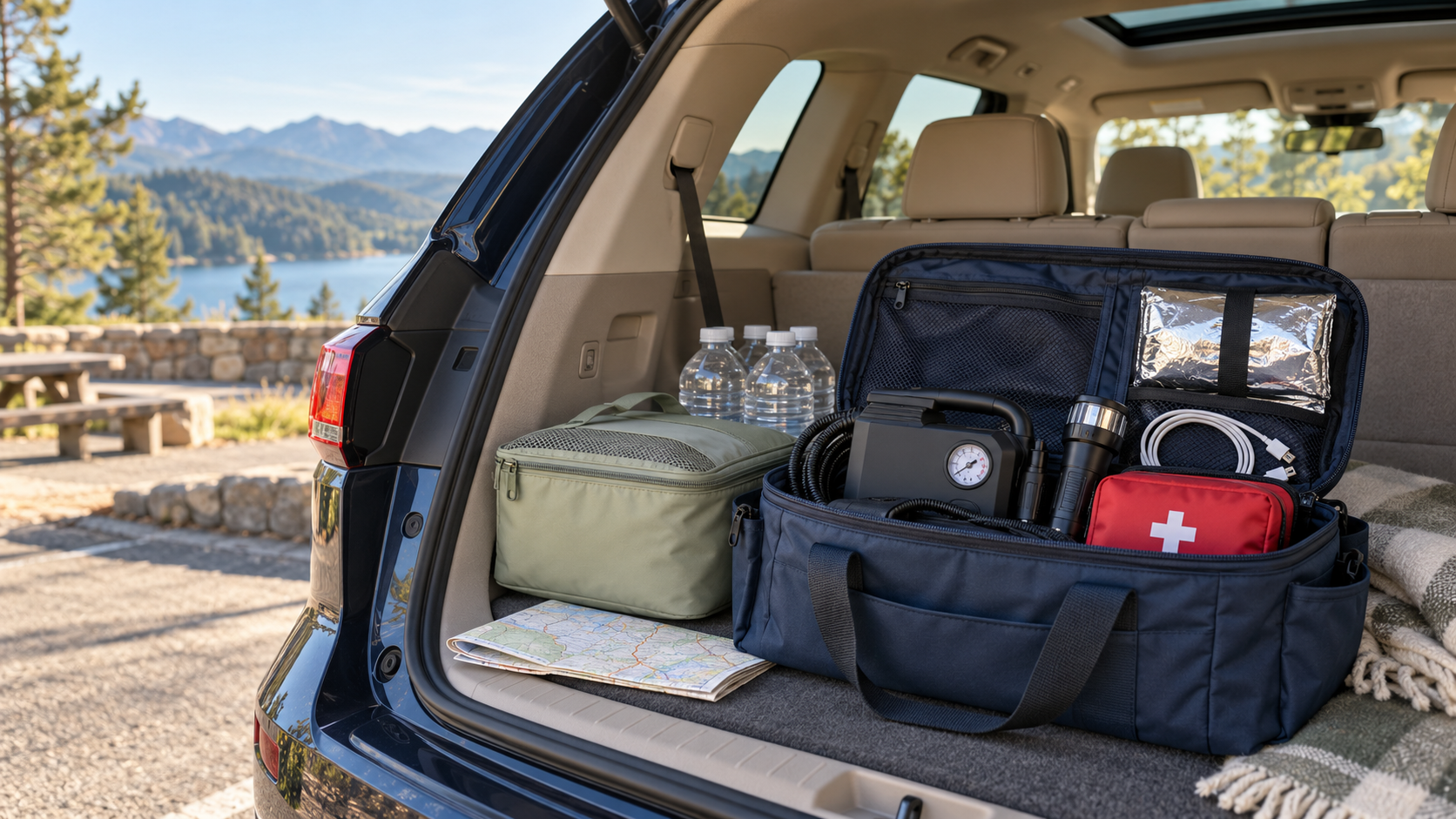
The Extra Mile: Build a Grab-and-Go Road Trip Emergency Kit
Here’s a simple way to keep everything organized without turning your trunk into a traveling hardware store.
Use a sturdy, portable storage bin or emergency bag to organize your supplies.
Divide your kit into three sections:
Vehicle and roadside supplies: Jump starter, tire inflator, tool kit, flashlight.
Comfort and weather supplies: Emergency blankets, ponchos, extra clothes.
Family essentials: First aid kit, drinking water, snacks, phone charger, and power bank.
Keep the kit secured so it can’t become a projectile during sudden braking.
One of the biggest advantages of a portable kit is that you can remove it when you need the cargo space. Just remember to put it back before your next trip.
You can also use the same kit for family vacations, sports tournaments, camping trips, and weekend getaways.
Your Road Trip Emergency Kit Checklist
- ☐ Portable jump starter — charged and compatible with your vehicle
- ☐ Portable tire inflator
- ☐ First aid kit — stocked and checked
- ☐ Flashlight — working, with batteries or charge
- ☐ Portable power bank — charged
- ☐ Emergency blankets and weather-appropriate warming supplies
- ☐ Rain ponchos for the family
- ☐ Compact basic tool kit
- ☐ Drinking water
- ☐ Nonperishable snacks
- ☐ Phone car charger and cables
- ☐ Extra clothes and socks
Bonus items worth considering: Reflective warning triangles, a high-visibility vest, roadside-assistance information, a tire-pressure gauge, paper maps, and seasonal equipment.
For winter travel, consider an ice scraper, small shovel, traction material, boots, and additional warm clothing.
Before You Leave: The 10-Minute Road Trip Safety Check
An emergency kit is important, but preparing the vehicle matters just as much.
Before a major trip, take a few minutes to check:
- ☐ Tire condition, tread, and recommended pressure
- ☐ Spare tire or tire-repair equipment, where applicable
- ☐ Fuel level or electric-vehicle charging plan
- ☐ Headlights, brake lights, and turn signals
- ☐ Windshield wipers and washer fluid
- ☐ Weather and road conditions along your route
- ☐ Current vehicle maintenance needs
- ☐ Roadside-assistance and insurance contact information
- ☐ Your destination address saved in your phone’s maps app
- ☐ Emergency supplies secured and accessible
This quick check isn’t a replacement for regular maintenance or a professional vehicle inspection. It’s simply another way to reduce avoidable surprises.
One More Tip: Prepare for the Unexpected Stop
If your vehicle breaks down, your first priority is keeping everyone safe.
Move out of traffic to a safe location when possible, activate your hazard lights, and call roadside assistance or emergency services as appropriate.
Never attempt a tire change or other repair in an unsafe roadside location.
If you’re traveling with children, help them understand that they should remain in a safe place and follow your directions during an emergency.
The goal isn’t to scare anyone. It’s to make sure the entire family knows what to do if plans suddenly change.
Road Trips Should Be About Making Memories
No one leaves home hoping to use their emergency kit.
Ideally, you’ll complete an entire vacation without touching most of these supplies.
But when unexpected situations happen, having the right equipment can help reduce confusion and make it easier to respond safely.
You don’t need to buy everything at once. Start with the essentials, build your kit over time, and check it before major trips.
Small items. Big peace of mind.
Because the best part of a family road trip should be the memories you make—not the roadside problems you weren’t prepared for.
As John Lennon said, “Life is what happens while you are busy making other plans.”
Command & Simplify — Practical Tools for a Simpler Life.
