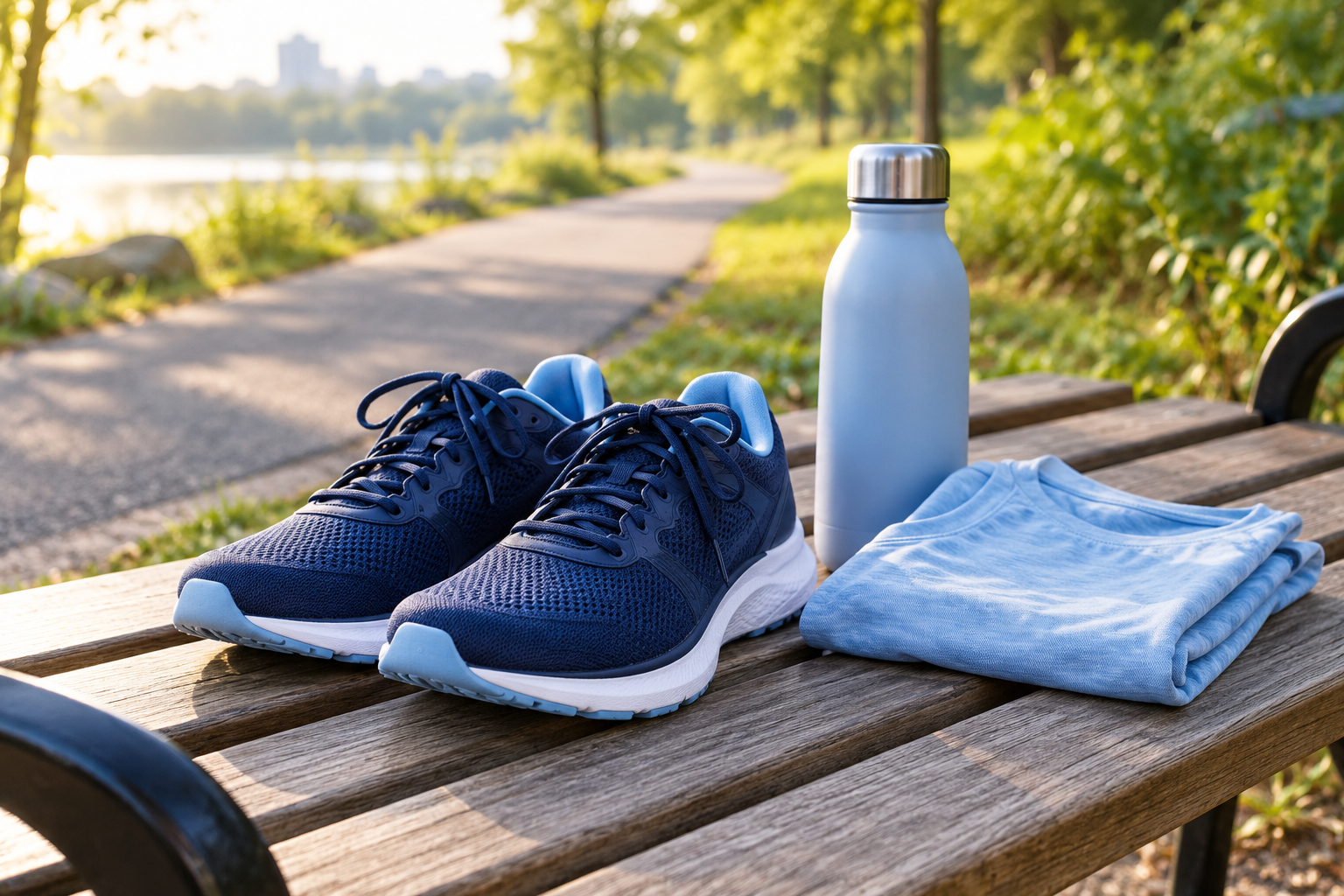
When I first decided to run a 5K, I didn’t go shopping for running gear.
I didn’t buy expensive running shoes.
I didn’t buy special running shorts.
I didn’t buy headphones. In fact, I don’t listen to music or anything else while I run.
I already had an Apple Watch, so I used that to keep track of how far I was running.
For shoes?
I wore the sneakers I already owned. I think they were just a pair of Adidas.
And then I started running.
That’s really the point of this article.
If you’re thinking about running your first 5K, it’s easy to convince yourself that you need to get everything figured out before you start.
You don’t.
Start easy. Progress slowly. And use what you already have when you can.
You Don’t Need to Run 3.1 Miles on Day One
A 5K is 3.1 miles.
That doesn’t mean your first run needs to be anywhere close to 3.1 miles.
When I started, I went one mile.
That was enough.
Then I gradually increased the distance.
I ran three times a week, and when things were going well, I generally added about a quarter mile each time out.
One mile became 1.25.
Then 1.5.
Then 1.75.
And so on.
I wasn’t trying to prove anything on one particular run.
I was trying to slowly build myself into somebody who could comfortably complete a 5K.
Start Easier Than You Think You Need To
If you’ve never really been a runner, there’s no reason your first run needs to destroy you.
Go a mile.
If a mile is too much right now, there’s nothing wrong with walking part of it.
The important thing is that you start.
Then see how you feel.
You’re building something.
You don’t need to build the whole thing today.
Progress Slowly
This was a big part of my approach.
I didn’t go from one mile to three miles because one run felt good.
I increased gradually.
For me, that was usually about a quarter mile at a time.
That doesn’t mean everybody needs to follow exactly the same progression.
The point is:
Don’t rush it.
Your cardiovascular fitness may start improving before the rest of your body is ready for large increases in running.
Give yourself time to adapt.
If something hurts or doesn’t feel right, don’t assume you have to keep increasing the distance just because that’s what you planned.
The plan can wait.
Three Runs a Week Was Enough for Me
When I was preparing for my first 5K, I ran three times per week.
That gave me running days and recovery days.
I didn’t feel like I needed to run every day to make progress.
Consistency mattered more.
Three manageable runs that I could recover from made more sense to me than trying to run constantly and turning the whole thing into something I dreaded.
Once I Reached 3 Miles, I Stayed There for a While
This is another thing I think beginners can overlook.
You don’t always have to increase the distance.
Once I got to around 3 miles, I maintained that distance for a while leading up to the 5K.
I had essentially reached the distance I needed.
There wasn’t any reason for me to keep turning every run into another mileage goal.
Sometimes progress means adding distance.
Sometimes progress means getting comfortable with the distance you’ve already reached.
At First, I Focused on Distance—Speed Came Later
When I first started running, I wasn’t particularly concerned about how fast I was going.
My goal was distance.
Could I run a mile?
Then could I go a little farther?
I kept gradually increasing the distance until I worked my way up to around three miles.
Only later did I start paying more attention to my time.
Once I could comfortably cover the distance, it became fun to see whether I could run that same distance a little faster.
That’s another reason I wouldn’t tell a new runner to worry about pace right away.
You don’t necessarily need to improve everything at once.
First I built the distance. Later I worked on the time.
For a beginner, simply finishing the run can be the goal.
There will be plenty of time later to decide whether you want to get faster.
You Probably Don’t Need Much Gear
This is where running can become unnecessarily complicated.
There are fantastic running shoes, watches, clothes, headphones, hydration products and other accessories available.
Some of them can absolutely be useful.
But you don’t necessarily need them to find out whether you enjoy running.
When I started, I used what I already had.
Regular sneakers.
Regular workout clothes.
My existing Apple Watch to measure distance.
That’s about it.
I didn’t even use headphones.
You don’t need to shop your way into becoming a runner.
Go run first.
Shoes Are Worth Paying Attention To
I do want to make an important distinction here.
I started in ordinary Adidas sneakers because that’s what I had.
As I continued running and eventually moved beyond the 5K toward training for a 10K, I decided to get better running shoes.
I moved to Brooks, and later I switched to HOKA.
As your mileage increases, footwear becomes something worth taking more seriously.
But that doesn’t mean somebody who’s thinking about trying a one-mile run tomorrow needs to delay starting until they’ve researched 30 pairs of shoes.
If the shoes you already own are comfortable and appropriate for exercise, they may be enough to get you started.
If you’re experiencing pain, have existing foot or lower-leg problems, or aren’t sure whether your footwear is appropriate, that’s different. Don’t ignore pain just to stick to a training plan.
You Don’t Need Headphones
This one is completely personal preference.
A lot of people love running with music, podcasts or audiobooks.
I don’t.
I run without them.
So headphones certainly aren’t something I’d put on a must-have list for a first 5K.
If you enjoy listening to something while you run, great.
If you don’t, that’s fine too.
Running doesn’t require entertainment.
You Don’t Need an Expensive Running Watch Either
I already owned an Apple Watch, so that’s what I used.
It was convenient because I could see how far I’d gone.
But the important information I needed was pretty simple:
How far did I run?
You don’t need advanced running analytics just to begin working toward a 5K.
If you already own a device that can track distance, use it.
If you don’t, there are other simple ways to measure a route.
Don’t let the absence of an expensive watch become the reason you don’t start.
Don’t Turn Your First 5K Into a Shopping Project
This is probably my biggest equipment recommendation.
Start running before you start buying.
You may discover that you love running.
If you do, great.
As your distances increase, you can decide which upgrades would actually help you.
That’s what happened to me.
I didn’t buy a pile of running equipment and then hope I’d become a runner.
I started running.
Then, as my goals grew, I upgraded something that mattered to me—my shoes.
There’s a big difference.
The First 5K Doesn’t Have to Be the End
After I reached three miles, I maintained it for a while and completed the 5K.
Then something interesting happened.
I wanted another goal.
So I started preparing for a 10K.
And after that, I decided to work toward a half marathon.
I certainly wasn’t thinking about all of that when I went out for that first one-mile run.
That’s another reason I wouldn’t overcomplicate the beginning.
You don’t know where this might lead.
Your job right now isn’t to become a half-marathon runner.
Your job is to take the next manageable step toward your first 5K.
A Simple Way to Start
You don’t need my exact mileage progression.
But the philosophy that worked for me was simple:
- Start with a manageable distance.
- Run consistently.
- Increase slowly.
- Don’t be afraid to maintain a distance for a while.
- Pay attention to how your body feels.
- Buy equipment when you have a reason to buy it—not because you think runners are supposed to own it.
Your first run doesn’t need to be impressive.
It needs to be something you can recover from and do again.
What Do You Actually Need?
Probably less than you think.
- Some comfortable clothes.
- Appropriate shoes you can safely exercise in.
- A reasonable way to know approximately how far you’re going.
- And a little patience.
That’s enough to begin.
You can figure out everything else later.
Start easy. Progress slowly.
The first goal isn’t 3.1 miles.
The first goal is getting out the door.
