Category: Fitness & Wellness

  • I Ran My First Half Marathon at 51. Here’s What the Journey Taught Me.

    I Ran My First Half Marathon at 51. Here’s What the Journey Taught Me.

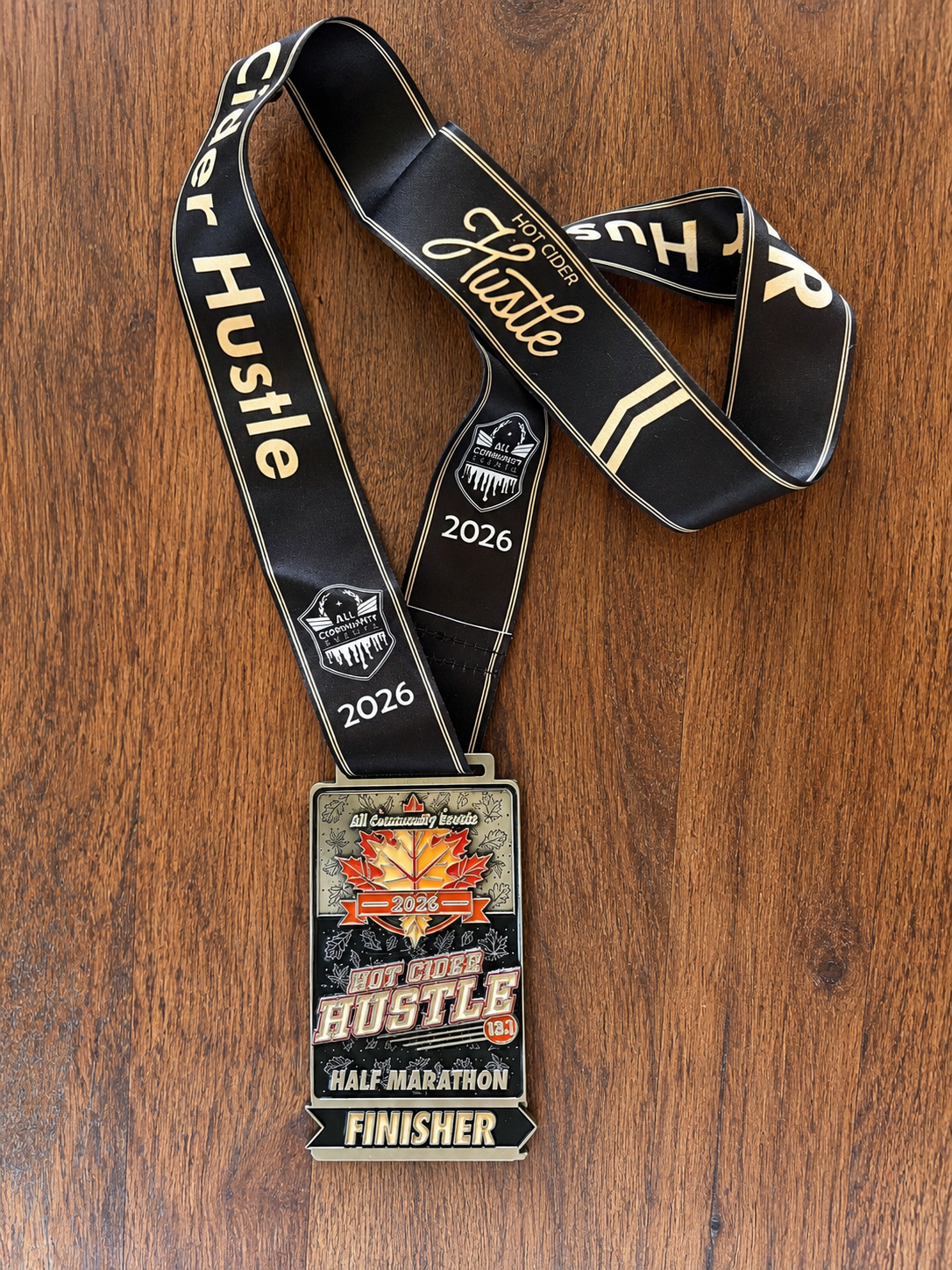
    On October 25, 2026, at 51 years old, I completed my first half marathon.

    My watch recorded 13.3 miles. My finishing time was 2 hours, 9 minutes, and 30 seconds. I even finished second in my age group.

    Sounds pretty good, right?

    Well, let me tell you something.

    It was REALLY hard.

    When I crossed that finish line, I wasn’t thinking about my time. I wasn’t thinking about my age-group finish. I was exhausted, proud, relieved, and, quite frankly, glad the whole thing was over.

    And by the whole thing, I don’t just mean the race.

    I mean the months of training, the injuries, the uncertainty, the early runs, the long runs, and the days when I wondered whether I was going to make it to the starting line at all.

    But looking back, I’m glad I did it.

    And the best part had nothing to do with running.

    It Started With One Manageable Step

    I didn’t wake up one morning and decide I was going to run 13.1 miles.

    My running journey started with shorter distances. One mile eventually became a 5K. Then came a 10K.

    As I became more comfortable, I started wondering what else I might be capable of.

    That’s when the half marathon entered the picture.

    I set my sights on October 25 and started working toward it.

    There was no magic formula. I ran consistently, gradually increased my distance, and tried to balance training with the rest of my life.

    Some days were encouraging. Other days were anything but.

    And I learned pretty quickly that having a training plan doesn’t mean everything will go according to that plan.

    Then Came the Setbacks

    Early in my training, a hip problem took me out of running for roughly two weeks.

    That was frustrating enough.

    Then, in August, I started experiencing pain around my Achilles tendon near the heel.

    This wasn’t simply being a little sore after a workout. At times, walking the next day was difficult.

    I didn’t run for a month.

    Suddenly, the question wasn’t how fast I could run my half marathon.

    It was whether I’d be able to run it at all.

    I had already put in a lot of work. Stopping wasn’t what I wanted to do, but continuing to push through the problem wasn’t a good answer either.

    So I rested, adjusted my training, and eventually started rebuilding.

    And when I say rebuilding, I mean starting small again.

    Learning to Run Again

    I returned with walk-and-jog intervals.

    Five minutes walking, two minutes jogging.

    Eventually, the jogging portions became longer and the walking portions became shorter.

    It wasn’t particularly glamorous.

    Nobody’s making a highlight video of a 51-year-old guy checking his watch to see if his two minutes of jogging are finished.

    But those sessions mattered.

    Little by little, I started running continuously again.

    Then came three miles. Four miles. Five miles.

    Eventually, I worked my way back to longer runs.

    There were days when my legs felt heavy and my energy wasn’t there. I made mistakes with fueling and learned that what I ate, drank, and did the night before a long run mattered.

    My longest training run before the race was 11 miles.

    That was enough for me to know the half marathon was going to be difficult.

    But it also gave me reason to believe I could finish.

    Race Day: October 25, 2026

    When race day finally arrived, I knew I had done what I could to prepare.

    I also knew I hadn’t followed some perfect training schedule.

    There had been interruptions, changes, and compromises along the way.

    But I was standing at the starting line.

    And that was something.

    My strategy was simple: keep moving, manage my energy, and walk briefly when drinking water.

    As the miles added up, the race got harder.

    Then harder.

    Then harder still.

    I wasn’t cruising along thinking about how enjoyable this whole experience was.

    I was working.

    And when I finally crossed the finish line, I was spent.

    13.3 miles. 2:09:30. Second place in my age group.

    I had done it.

    The Best Part Wasn’t the Finish Time

    Here’s what mattered most to me.

    My kids were there.

    They got to see their dad set a difficult goal, work toward it for months, deal with setbacks, and ultimately finish what he started.

    Not because I needed to impress them.

    Not because I wanted them to think their dad was some great athlete.

    I wanted them to see what commitment looks like.

    I wanted them to understand that accomplishing something difficult usually involves more than enthusiasm at the beginning.

    There are going to be setbacks.

    There are going to be days when things don’t go right.

    Sometimes you’re going to have to change your approach.

    Sometimes you’re going to have to start rebuilding from a place you thought you’d already moved beyond.

    But you can keep working toward something that matters to you.

    That’s what I hoped they would take away from watching this journey.

    And that meant more to me than any finishing time ever could.

    So, Am I Done Running?

    Funny thing.

    On race day, I remember thinking that I might not run again for quite a while.

    Maybe not until spring.

    I had certainly had enough running for one day.

    But a couple of days later, I found myself thinking about signing up for another 5K in November or December.

    In the cold.

    Apparently, exhaustion has a short memory.

    I’m not sure what running will look like for me this winter, and I still need to respect the soreness and recovery that come with a demanding race.

    But I do know this.

    I’m glad I took on the challenge.

    Not because I ran a particular time or finished in a particular place.

    I’m glad because I committed to something, worked through difficult stretches, and saw it through.

    And because my kids were there to see it.

    What I’d Tell Someone Thinking About Their First Race

    You don’t have to start with a half marathon.

    You don’t even have to start with a 5K.

    Start with something manageable.

    Build consistency. Increase gradually. Respect injuries and recovery. Make adjustments when life or your body demands them.

    And don’t get so focused on the final destination that you forget to recognize the progress you’re making along the way.

    My half marathon wasn’t where my running journey began.

    It was simply the next challenge.

    And it taught me something I hope my kids remember, too:

    You don’t have to know exactly how you’re going to accomplish something before you begin.

    You just have to be willing to commit, start, keep learning, make adjustments, and continue working toward it.

    Small steps. Big finish.


    This is a personal account of my running experience, not a training prescription. Running involves physical risks, and training should be adjusted to individual health, fitness, and recovery needs.

  • 10 Pieces of Home Gym Equipment Actually Worth Owning

    10 Pieces of Home Gym Equipment Actually Worth Owning

    Build a practical home gym without spending a fortune—or turning your spare bedroom into a fitness equipment warehouse.

    By Command & Simplify | Fitness & Wellness

    Let’s get something straight right away: you don’t need a garage full of expensive exercise equipment to get a good workout.

    You don’t need a dozen machines or a wall of mirrors. You need equipment you’ll actually use.

    A home gym can be a great investment—if you have the space and you’re actually going to use the equipment. Otherwise, it can quickly become the most expensive catch-all room in the house. Before you know it, the treadmill is holding laundry, the weight bench is covered in boxes, and your exercise bike has become a deluxe drying rack.

    The goal isn’t to fill a room with equipment. It’s to create a workout space you’ll actually use.

    I’ve spent plenty of time running, rowing, lifting weights, and doing bodyweight exercises. Over time, I’ve found that some of the simplest equipment can be the most useful.

    Dumbbells, kettlebells, a good exercise mat, and a rowing machine can provide a tremendous variety of workouts without requiring a commercial gym.

    I’ve also found ways to make basic exercises more challenging using a weighted vest.

    For this guide, we’re combining that firsthand workout experience with additional equipment recommendations for different fitness levels and budgets.

    These aren’t ten things everyone must buy. They’re ten pieces of equipment worth considering, with explanations of what each does, who might benefit, and where you can save money.

    Affiliate disclosure: This article contains affiliate links. Command & Simplify may earn a commission if you purchase through these links, at no additional cost to you. Recommendations are based on practical usefulness, personal experience where noted, and product research—not commission rates.

    1. Dumbbells: The Foundation of a Practical Home Gym

    If I could recommend only one piece of strength-training equipment, dumbbells would be near the top of my list.

    They’re versatile, easy to store, and useful for dozens of exercises.

    I regularly incorporate dumbbells into workouts, including curls, rows, shoulder presses, and exercises that combine several movements.

    One thing I’ve learned is that having more than one weight makes a big difference.

    My preferred home setup includes:

    • 8-pound dumbbells: Useful for lighter exercises and movements involving smaller muscle groups.
    • 15-pound dumbbells: A practical intermediate option for curls, presses, and other exercises.
    • 20-pound dumbbells: Helpful when additional resistance is appropriate.

    Those are personal preferences, not universal starting weights. Choose resistance based on your strength, technique, and the exercise.

    Our recommended product

    Power Systems Rubber Hex Dumbbells

    These fixed-weight dumbbells come in multiple weight options. The hexagonal design also helps keep them from rolling around the floor.

    View Rubber Hex Dumbbells at Power Systems

    My advice: Start with the weights you’ll use most often. You can add heavier pairs as you get stronger.

    There’s no prize for owning a 50-pound dumbbell you can’t safely lift.

    2. Adjustable Dumbbells: The Space-Saving Alternative

    Fixed-weight dumbbells are great, but there’s one obvious disadvantage.

    The more pairs you buy, the more floor space they occupy.

    Adjustable dumbbells solve that problem by combining several weight options into one compact system.

    They’re especially useful for people who want a variety of weights without purchasing and storing a large collection.

    Our recommended product

    Power Systems Adjustable Dumbbell Set

    This is a premium alternative worth considering for people who value versatility and limited storage space.

    View Adjustable Dumbbell Set at Power Systems

    When we reviewed the product, the listed options ranged from approximately $349.99 to $529.99, depending on configuration. Confirm the current price and weight range before purchasing.

    My advice: You don’t need both fixed-weight dumbbells and an adjustable set. Pick the approach that makes the most sense for your budget, training needs, and available space.

    3. Kettlebells: One Weight, Plenty of Exercises

    Kettlebells are another piece of equipment I personally enjoy using.

    They can add variety to traditional strength training, and their handle design makes them useful for exercises such as carries, squats, deadlifts, and certain swinging movements.

    A kettlebell doesn’t replace every dumbbell exercise, but it offers different movement possibilities.

    And you don’t need a whole collection to get started.

    Our recommended product

    Power Systems Kettlebell Prime

    We compared the Elite Kettlebell and Kettlebell Prime before choosing this option.

    The Prime offered a better price for the 15-pound version when we checked:

    • 10-pound option: $43
    • 15-pound option: $52

    Several other weights were also available. Check the current price and stock for your chosen size.

    View Kettlebell Prime at Power Systems

    My advice: Begin with controlled exercises and learn proper technique before attempting heavy or fast kettlebell swings.

    4. An Exercise Mat: Simple, Affordable, and Surprisingly Useful

    An exercise mat might not be the most exciting fitness purchase you’ll make, but it’s one of the most practical.

    I use a mat for floor exercises, including planks, core workouts, and other bodyweight movements.

    A decent mat creates a defined workout space and makes certain floor exercises more comfortable.

    It’s also easy to put away when you’re finished.

    Our recommended product

    Power Systems Premium Yoga Sticky Mat

    We selected the navy, quarter-inch-thick version.

    When checked, it was in stock for $24.50.

    The thickness offers cushioning for many common floor exercises while remaining easy to store.

    View Premium Yoga Sticky Mats at Power Systems

    My advice: For people who spend a lot of time kneeling or performing floor exercises, mat thickness matters. Choose enough cushioning for your comfort without sacrificing stability.

    5. A Stability Ball: A Useful Optional Core-Training Tool

    Stability balls aren’t essential for everyone, but they can add variety to core workouts, balance exercises, and controlled strength-training movements.

    The unstable surface changes the demands of certain exercises, requiring additional attention to balance and body position.

    They’re also relatively inexpensive compared with many other fitness products.

    This is an equipment recommendation based on its potential uses, not a product I’ve personally tested.

    Our recommended product

    Power Systems VersaBall Stability Ball

    We found two available sizes:

    • 55 cm — $28
    • 65 cm — $33

    Both were in stock when checked.

    View VersaBall Stability Ball at Power Systems

    My advice: Choose a ball that fits your height and intended exercises, and follow the manufacturer’s inflation and safety guidelines.

    If you’re already happy with your core routine, this is an optional purchase—not something you need to rush out and buy.

    6. A Jump Rope: Cardio Without Taking Up a Room

    Some fitness equipment costs hundreds of dollars and requires a dedicated space.

    A jump rope costs a few dollars and fits in a drawer.

    That’s a pretty good deal.

    Jumping rope can provide a challenging cardiovascular workout while also developing coordination and rhythm.

    It’s a useful option for people who want short, active sessions without a large machine.

    Of course, jumping isn’t appropriate for everyone. Anyone dealing with foot, ankle, Achilles, or knee problems may be better served by lower-impact activities.

    Our recommended product

    Power Systems Speed Rope

    When we researched it, the rope was offered in three sizes, priced from $5 to $6, with all three in stock.

    View Speed Rope at Power Systems

    My advice: Get the proper rope length, start with brief sessions, and build up gradually.

    You don’t have to jump for twenty minutes straight to benefit from using one.

    7. A Foam Roller: An Optional Recovery Accessory

    Foam rollers are popular for self-massage, mobility routines, and temporarily reducing feelings of muscle tightness.

    They’re not magic, and they aren’t a substitute for sleep, recovery time, or sensible training.

    But some people find them helpful.

    I don’t personally use a foam roller as part of my regular workout routine, so I’m not going to pretend it’s something I can’t live without.

    This is one of the optional items on our list.

    Our recommended product

    Power Systems High Density Foam Roller

    We found three in-stock options:

    • Standard size — $14.95
    • 18-inch — $19.95
    • 36-inch — $39.95

    View High Density Foam Roller at Power Systems

    My advice: Start gently, avoid rolling directly over painful joints or injured tissue, and treat foam rolling as an optional addition to your recovery routine.

    8. A Weighted Vest: Make Familiar Exercises More Challenging

    One piece of equipment I personally use is an 8-pound Athletic Works weighted vest.

    Mine is the older black neoprene model with padded shoulder straps and adjustable buckles.

    I use it for several activities:

    • Walking
    • Squats
    • Push-ups
    • Planks
    • Occasionally running

    What I like about a weighted vest is that it adds resistance without requiring me to hold weights in my hands.

    Bodyweight exercises that have become familiar can feel more challenging with a little additional load.

    But here’s an important distinction: A weighted vest is not necessary for beginners.

    Added weight increases the demands on your muscles, joints, and connective tissues. Running with a vest deserves particular caution because it increases loading with every step.

    Our recommended product

    Athletic Works 8 lb Weighted Vest

    This is the model I personally use. However, availability has been limited, and we haven’t confirmed an eligible Walmart affiliate link.

    Product link to be added when availability and affiliate eligibility are verified.

    My advice: Get comfortable with the unweighted exercise first. Start with short, controlled sessions, and increase resistance cautiously.

    For someone already comfortable performing push-ups, squats, and planks, a modestly weighted vest may provide useful variety.

    9. A Rowing Machine: My Favorite Cardio Investment

    This is one of the bigger purchases on the list, but it’s also one of my personal favorites.

    I own a MERACH rowing machine, purchased through Walmart, and I really enjoy using it.

    Rowing has become a regular part of my fitness routine.

    I use it alongside running, strength training, and other activities.

    What I appreciate about rowing is that it provides a workout involving both the upper and lower body while offering a lower-impact alternative to running.

    You can adjust the intensity for an easier session or push yourself for a more demanding cardiovascular workout.

    And unlike a treadmill, a rowing machine gives your arms something to do besides wondering how much longer you’re going to be on the treadmill.

    My personal recommendation

    MERACH Rowing Machine

    This is the brand I personally own and use.

    We still need to verify the exact model and its current availability at Walmart before recommending a specific listing.

    Product link to be added after model verification and, if approved, Walmart affiliate eligibility confirmation.

    My advice: A rowing machine isn’t the first piece of equipment everyone needs to purchase. But if you enjoy rowing and want an indoor cardio option, it’s worth considering.

    Before purchasing, pay attention to the machine’s footprint, resistance system, comfort, weight capacity, and storage requirements.

    10. Resistance Bands: Affordable Strength Training Almost Anywhere

    Resistance bands might be the simplest way to add exercise variety without taking up much space.

    They’re portable, inexpensive, and useful for many types of resistance training.

    You can use them for controlled upper-body exercises, lower-body movements, and certain warm-up routines.

    Different band strengths also make it easier to adjust resistance.

    Although dumbbells and kettlebells are my personal strength-training staples, bands are worth considering because they’re so convenient.

    Our recommended product

    Power Systems Fabric Resistance Bands

    When we researched this product, the three-band kit was listed for $20.

    View Fabric Resistance Bands at Power Systems

    My advice: Inspect resistance bands for wear before using them, and choose resistance levels you can control through the intended movement.

    They’re particularly useful for people who need equipment that’s easy to pack or store.


    What Home Gym Equipment Can You Skip?

    Let’s talk about the stuff you probably don’t need right away.

    When you’re building a home gym, it’s easy to get distracted by machines that promise incredible results.

    But buying more equipment doesn’t automatically mean getting better workouts.

    Before spending money, ask yourself three questions:

    Will I actually use it?

    A simple pair of dumbbells used three times a week is more valuable than an expensive machine collecting dust.

    Does it provide something my existing equipment doesn’t?

    If you already have dumbbells and a kettlebell, you may not need another piece of equipment that performs essentially the same exercises.

    Do I have space to store it?

    A home gym should make your life easier, not force you to climb over equipment to reach the washing machine.

    For most beginners, I’d postpone expensive multi-station machines, oversized weight racks, specialty exercise gadgets, and equipment that serves only one narrow purpose.

    How I’d Build a Home Gym on a Budget

    If I were starting from scratch, I wouldn’t purchase all ten items at once.

    I’d start small.

    First purchases: A pair of appropriately weighted dumbbells, an exercise mat, and perhaps resistance bands.

    Next additions: A kettlebell or a jump rope, depending on whether strength or cardio is the bigger priority.

    Later upgrades: Equipment such as a rowing machine, adjustable dumbbells, or a weighted vest—only when it fits your routine and budget.

    A stability ball or foam roller can be useful additions, but neither is mandatory.

    The goal isn’t to own ten products.

    The goal is to have the right tools for workouts you’ll actually do.

    My Final Takeaway

    After years of exercising in different ways, I’ve come to appreciate simple, practical equipment.

    Dumbbells are versatile. Kettlebells add variety. An exercise mat makes floor workouts more comfortable. My MERACH rower provides an indoor cardio option I genuinely enjoy.

    And an 8-pound weighted vest lets me add a little resistance to exercises I already do.

    But none of these tools does the work for you.

    The most useful home gym isn’t necessarily the most expensive.

    It’s the one you actually use.

    Start with what fits your goals, add equipment when you need it, and don’t feel pressured to fill every corner of your house with fitness gear.

    That’s a simpler—and often more affordable—way to build a home gym that works.


    More from Command & Simplify

    If you’re working on improving your fitness, you may also enjoy:

    Command & Simplify

    Editorial note: Prices and availability were checked during product selection in October 2026 and can change. Product-specific firsthand experience is distinguished from researched recommendations. Affiliate links should be tested for tracking and current availability before publication.

  • Post-Run Recovery After 50: What Actually Helps (and What Doesn’t)

    Post-Run Recovery After 50: What Actually Helps (and What Doesn’t)

    You finished the run. Now what? Here's what I've learned about sore muscles, heavy legs, exhaustion, and getting ready to run again.

    When I started running at 49, I was focused on one thing.

    Running.

    Could I finish a mile? Could I make it three miles? Could I complete a 5K?

    Eventually, those goals became bigger.

    Now I'm 51, and I've completed an 11-mile run.

    And somewhere along the way, I discovered something I hadn't given nearly enough thought to when I first started.

    Finishing the run is only half the battle.

    Because what happens afterward matters, too.

    As my distances have increased, I've learned that recovery isn't necessarily about expensive equipment, complicated supplements, or an elaborate routine.

    Sometimes the simplest things matter most.

    And sometimes, the best thing you can do is give yourself a little time.

    Why My 11-Mile Run Was Different

    By the time I attempted 11 miles, I'd already completed runs of six, seven, eight, and nine miles.

    And here's something important.

    Those earlier runs hadn't left me feeling completely exhausted.

    So when I went out for 11 miles, I had some confidence in what I could accomplish.

    But this run was different.

    My legs felt heavy. My energy was low. I walked several times, and by the time I finished, I was completely drained.

    I completed those 11 miles in 2 hours, 5 minutes, and 37 seconds.

    I was happy I'd finished.

    But afterward?

    I wasn't thinking about another run.

    I was thinking about sitting down.

    What Actually Helped Me

    Here's the interesting part.

    There wasn't some special recovery product that suddenly made everything better.

    I needed time.

    I needed to let a little time pass and give my body a chance to settle down.

    Eventually, I took a bath.

    That felt good.

    Then I ate, and that helped too.

    Nothing complicated. Nothing expensive.

    Time, a relaxing bath, and some food.

    By the following morning, my energy felt normal again.

    My legs were still a little sore, and I could feel some of that soreness two days after the run.

    But otherwise, I felt fine.

    That experience reminded me of something important.

    Just because you've handled one distance comfortably doesn't mean a longer distance will affect you the same way.

    Going from nine miles to eleven might not sound like an enormous jump.

    But it's more than a 20% increase in distance.

    And for me, those extra miles made a noticeable difference.

    Was it the added distance? My fueling? My energy level going into the run?

    Maybe some combination of those things.

    I don't know for certain.

    What I do know is that I need to respect the demands of longer runs and give myself time to recover afterward.

    That doesn't mean everyone should delay food or fluids after a demanding run, particularly if they're feeling unwell. Appropriate hydration and nutrition matter, and unusual or persistent exhaustion deserves medical attention.

    Some Days You Have It. Some Days You Don't.

    Here's something I've noticed since I started running.

    Some days I feel fantastic.

    My legs feel good, I've got energy, and running feels almost effortless.

    Other days?

    Not so much.

    And sometimes there's absolutely no rhyme or reason to it.

    Maybe it's part of being 51.

    I suppose it could be.

    It's the first time I've been this age, so I'm still figuring it out.

    But I've learned not to judge my fitness based on one difficult run.

    I've completed runs of six, seven, eight, and nine miles without feeling completely exhausted.

    Then I went out and completed eleven miles, and that particular run absolutely drained me.

    By the next morning, my energy was back to normal. My legs were still a little sore, even two days later, but otherwise I felt fine.

    Was it the extra mileage? My fueling? Something else?

    Maybe some combination of everything.

    I don't know.

    And I'm learning that I don't always need to have an answer.

    What matters is paying attention to how I feel, adjusting when necessary, and not forcing every run to be a great one.

    One bad run doesn't erase all the good ones that came before it.

    And one great run doesn't mean you're ready to conquer the world tomorrow.

    Some days you've got it.

    Some days you don't.

    The goal is to keep showing up, train intelligently, and recognize when your body needs an easier day.

    1. Start Recovering as Soon as You Finish

    When I finish a long run, my natural inclination is sometimes to stop moving immediately.

    Especially when I'm exhausted.

    But going straight from a hard effort to sitting perfectly still isn't always the most comfortable transition.

    A short, easy walk gives your breathing and heart rate a chance to settle gradually.

    You don't need to walk another two miles.

    Just move around gently for a few minutes if you feel well enough.

    Then change out of sweaty clothes, get comfortable, and begin replenishing what you've used.

    My takeaway: Don't make recovery an afterthought that begins three hours later.

    One important exception: if you're unusually dizzy, faint, confused, or otherwise unwell, don't try to walk it off. Stop, get somewhere safe, and seek medical help when appropriate.

    2. Eat Something That Actually Helps You Recover

    This is one area I think newer runners can overlook.

    You just spent an hour or two exercising.

    Your body has used energy, and your muscles need nutrients to repair and adapt.

    After a longer run, a meal or snack containing carbohydrates and protein makes sense.

    Carbohydrates help replenish the energy stored in your muscles.

    Protein supports muscle repair.

    It doesn't have to be a special recovery shake.

    Some straightforward options include:

    • Eggs and toast with fruit

    • Greek yogurt with oatmeal or a banana

    • Chicken, rice, and vegetables

    • A turkey sandwich and fruit

    • A smoothie with protein and carbohydrates

    • Leftovers from a normal, balanced meal

    Personally, I prefer practical food over buying a collection of products that promise miraculous recovery.

    For people exercising again soon, timing can be especially important. But if your next challenging run isn't until another day, eating a balanced meal within a reasonable period is generally more important than hitting an exact minute on the clock.

    My takeaway: Don't spend a fortune on recovery products while overlooking a decent meal.

    3. Rehydrate—but Don't Just Keep Chugging Water

    During longer runs, I carry water with a hydration packet mixed into it.

    It's part of my preparation.

    But hydration doesn't stop at the finish line.

    After running, especially in warm weather, you've likely lost fluid through sweat.

    You need to replace that fluid appropriately.

    For many runs, regular water and normal meals are enough.

    After longer or particularly sweaty efforts, replacing some sodium through food or an appropriate electrolyte drink may also be useful.

    The amount varies by person, weather, and how much you sweat.

    The goal isn't to drink as much water as physically possible. Drinking excessive amounts can be dangerous.

    Pay attention to thirst, how you're feeling, and your conditions.

    And remember that hydration packets aren't all the same. Some contain meaningful electrolytes; others are primarily flavoring.

    My takeaway: Have a hydration plan, but don't assume more is always better.

    4. Heavy Legs Don't Automatically Mean Something Is Wrong

    One of the things I've noticed as my mileage has increased is how heavy my legs can feel after a difficult run.

    I'm not necessarily talking about sharp pain.

    I'm talking about that tired, worn-out feeling when your legs have done a lot of work.

    After longer runs, I can also have general muscle soreness the next morning.

    Fortunately, that soreness has often improved as the day goes on.

    There's a name for soreness that develops after unfamiliar or demanding exercise: delayed-onset muscle soreness, often shortened to DOMS.

    It commonly becomes noticeable hours after a workout and may peak a day or two later.

    That doesn't mean every ache is ordinary muscle soreness.

    A sharp, localized, worsening, or recurring pain—especially one that changes how you walk or run—deserves more attention.

    I've had muscle strains and discomfort around the back of my heel before, so I know it's important not to explain away every warning sign as normal recovery.

    My takeaway: Learn the difference between general tired muscles and pain that may represent an injury.

    5. Sometimes Light Movement Feels Better Than Doing Nothing

    When my legs are generally sore, sitting around all day doesn't always make them feel better.

    Sometimes getting up, walking, and moving around gently helps loosen things up.

    That doesn't mean going out for another hard run.

    It might mean:

    • Taking an easy walk

    • Doing some gentle mobility work

    • Riding a stationary bike at a very easy pace

    • Moving around the house instead of staying in one position all afternoon

    Light movement can temporarily reduce stiffness and make sore muscles feel more comfortable.

    But there's a difference between easy movement and adding another demanding workout before your body is ready.

    And if you're exhausted, ill, or dealing with a possible injury, genuine rest may be the better choice.

    My takeaway: Recovery doesn't always mean sitting completely still—but it shouldn't become another workout you have to survive.

    6. Stretching Helps Me Feel Better, but It Isn't Magic

    I'm a believer in taking care of my legs.

    I've strained muscles before, particularly around my calves, and that has made me more conscious of warming up before running and cooling down afterward.

    I pay attention to my hamstrings, quadriceps, and calves.

    After a run, I like gentle stretching.

    For me, it can feel good when my muscles are tight.

    But there's an important distinction.

    Stretching may help you feel less stiff, but it isn't a guaranteed way to prevent next-day soreness or running injuries.

    I wouldn't recommend forcing a deep stretch into a painful muscle.

    And I'm particularly cautious about aggressive calf stretches when there's discomfort near the Achilles tendon or heel.

    If a stretch hurts, back off.

    If a problem keeps returning, get it checked rather than stretching harder and hoping for the best.

    My takeaway: Stretch for comfort and mobility, not because you believe it's a cure for everything.

    7. Epsom Salt Baths: I Like Them, but Let's Be Realistic

    Here's one of my personal favorites.

    After a difficult run, I enjoy an Epsom salt bath.

    There's something about getting into warm water when your legs are tired that feels good to me.

    I find it relaxing, and it's part of the recovery routine I enjoy.

    But does the Epsom salt itself actually speed muscle recovery?

    That's much harder to establish.

    Although Epsom salt contains magnesium sulfate, good evidence that soaking in it supplies meaningful magnesium through your skin or accelerates muscle healing is lacking.

    The warm water and relaxation may explain much of the benefit people experience.

    And that's okay.

    Not everything you do after a run needs to create a measurable athletic advantage.

    Sometimes feeling comfortable and relaxed is enough.

    Just avoid excessively hot water, especially if you're overheated or lightheaded after running.

    My takeaway: Enjoy a warm bath if it helps you feel better. Just don't mistake comfort for a scientifically proven recovery shortcut.

    8. Sleep Might Be the Most Underrated Recovery Tool

    I can buy better shoes.

    I can experiment with hydration mixes.

    I can stretch, walk, and take a warm bath.

    But none of that replaces adequate sleep.

    Your body needs rest to recover and adapt to the work you've done.

    For adults over 50, that's worth taking seriously—especially when combining running with work, family obligations, and everyday responsibilities.

    Most adults should aim for at least seven hours of sleep regularly, and some people need more.

    After a demanding run, I don't think it makes sense to sacrifice sleep just to squeeze in another workout.

    My takeaway: Before spending money on recovery gadgets, make sure you're giving yourself enough time to sleep.

    9. The Next Run Doesn't Have to Be Another Big Run

    This one is especially important to me.

    I like challenging myself.

    If you've read my first long-run article, you know I believe in doing difficult things rather than automatically choosing the easiest path.

    But there's something I'm learning as I build toward longer distances.

    You don't have to prove how tough you are every single day.

    After a demanding long run, I don't need to go out the next morning and try to beat that distance.

    My muscles, tendons, and energy levels need time to recover.

    Some days the right decision is an easy run.

    Some days it's walking or another light activity.

    And some days it's taking a genuine day off.

    Recovery needs vary. There's no universal rule saying every runner over 50 must rest exactly two or three days after every long run.

    What matters is how demanding the workout was, what you're accustomed to, whether symptoms are improving, and whether you're ready for the next session.

    My takeaway: Consistency over months matters more than squeezing one more hard workout into a week.

    10. Know When Exhaustion Is More Than Normal Fatigue

    I want to make an important point here.

    After my 11-mile run, I was extremely exhausted.

    I also experienced some stomach discomfort early in the run, although that eventually passed.

    I've learned that nutrition, preparation, pacing, and recovery all affect how I feel.

    But I don't want someone reading this article to conclude that feeling completely wrecked after every run is the goal.

    It isn't.

    And there are symptoms you shouldn't simply classify as being tired.

    Stop exercising and seek urgent medical assessment for symptoms such as chest pain, fainting, severe shortness of breath, confusion, or severe weakness. Persistent dizziness, unusual nausea, dehydration symptoms, or other symptoms that are out of proportion to the workout also deserve prompt medical attention.

    Severe muscle pain or swelling accompanied by unusually dark urine can be a warning sign of a serious condition and requires urgent medical evaluation.

    The goal of running is to become stronger and healthier.

    Not to see how much punishment your body can tolerate.

    My takeaway: Mental toughness matters. Knowing when to stop matters, too.

    11. What You Probably Don't Need to Buy

    Running has an entire marketplace devoted to recovery.

    Foam rollers.

    Massage guns.

    Compression boots.

    Recovery drinks.

    Specialized supplements.

    Ice baths.

    And equipment that costs more than some people's monthly grocery bills.

    Some of these tools can help people feel more comfortable, and certain approaches have modest evidence for reducing soreness.

    A basic foam roller, for example, may provide temporary relief for some runners.

    But none of these products should replace the fundamentals.

    Start with:

    • Enough food

    • Appropriate hydration

    • Sufficient sleep

    • Easy movement when helpful

    • Rest between demanding workouts

    • A training plan that matches your current ability

    If you later find a tool that genuinely makes your routine easier, great.

    But don't feel as though you need to purchase a complete recovery system just because you've started running farther.

    My takeaway: Do the simple things consistently before shopping for complicated solutions.

    My Simple Post-Run Recovery Checklist

    Right After the Run

    ☐ Slow down and cool off gradually.

    ☐ Walk gently for a few minutes if you're feeling well.

    ☐ Begin replacing fluids as needed.

    ☐ Eat a meal or snack with carbohydrates and protein.

    ☐ Change into comfortable, dry clothes.

    Later That Day

    ☐ Keep drinking fluids normally.

    ☐ Eat balanced meals.

    ☐ Move gently if it helps with stiffness.

    ☐ Stretch lightly if comfortable.

    ☐ Enjoy a warm bath if you like one.

    ☐ Make sleep a priority.

    Before Your Next Run

    ☐ Check how your legs and energy levels feel.

    ☐ Notice any recurring or localized pain.

    ☐ Consider whether you need another easy or rest day.

    ☐ Avoid turning every run into a personal-record attempt.

    ☐ Adjust your training if your recovery isn't keeping up.

    The Most Important Lesson I've Learned About Recovery

    I didn't start running at 49 because I thought it would be easy.

    I wanted to challenge myself.

    I wanted to see what I could accomplish.

    And I wanted my children to see that you can start something difficult later in life and make progress through effort and consistency.

    At 51, finishing 11 miles means something to me.

    But I've also learned that determination doesn't mean doing everything the hard way.

    Sometimes the smart decision is to rest.

    Sometimes it's to eat, hydrate, and get a good night's sleep.

    Sometimes it's recognizing that your body isn't ready for the next challenge just yet.

    I still want to push myself.

    I still want to see how far I can go.

    But I also want to recover well enough to keep running next week, next month, and years from now.

    That's the real goal.

    Not just finishing one difficult run.

    Building a healthier, stronger life that lets you keep doing difficult things.

    Keep Building Your Running Foundation

    If you're getting started, read Your First 5K: What You Actually Need (and What You Don’t).

    Ready to run farther? Read What to Bring on Your First Long Run: The Essentials for 6–10 Miles, including our free printable checklist.

    Command & Simplify

    This article shares personal experience and general educational information, not individualized medical advice. Consult a qualified healthcare professional about persistent pain, unusual symptoms, or health concerns related to exercise.
  • What to Bring on Your First Long Run: The Essentials for 6–10 Miles

    What to Bring on Your First Long Run: The Essentials for 6–10 Miles

    Running farther doesn't require a fortune in equipment. But a little preparation can make a big difference.

    There's a big difference between heading out for a three-mile run and deciding you're going to tackle six, eight, or even ten miles.

    I started running at 49. Now, at 51, I've completed an 11-mile run.

    And one of the biggest surprises wasn't necessarily how I felt during the run.

    It was how wiped out I felt afterward.

    After some of my longer runs, I was completely exhausted. My legs felt heavy. Sometimes I'd still have a little soreness the following morning, although it usually improved as the day went on.

    My 11-mile run wasn't exactly a highlight reel. I walked quite a few times, my energy was low, and I wasn't feeling particularly great.

    But I finished.

    And finishing a difficult distance taught me that a long run involves more than simply putting one foot in front of the other.

    Your preparation matters. Your equipment matters. Your recovery matters.

    And sometimes, the biggest challenge is what happens between your ears.

    Here's what I've learned about preparing for longer distances, without turning running into an expensive shopping project.

    1. Good Running Shoes Are Worth Prioritizing

    If there's one piece of equipment I'd encourage new distance runners to take seriously, it's their shoes.

    Not just athletic shoes.

    Actual running shoes.

    When I started running longer distances, I noticed the difference. Proper running shoes felt better and more comfortable for the job I was asking them to do.

    That doesn't mean you need the most expensive pair in the store.

    Look for shoes that:

    • Fit comfortably without pinching or rubbing
    • Leave enough room for your toes
    • Hold your heel securely
    • Feel good during shorter training runs
    • Don't create new areas of pain

    And don't make your longest run the first time you test a brand-new pair.

    A good fit matters more than a flashy price tag.

    2. Wear Comfortable Clothes You've Already Tested

    For a short run, a shirt that rubs a little might not seem like a big deal.

    After eight miles, you may feel very differently about that shirt.

    Choose clothing that moves comfortably, handles sweat reasonably well, and suits the weather.

    I recommend checking:

    • Your shirt and shorts or running pants
    • Socks that don't bunch or create hot spots
    • Layers for cooler weather
    • A hat, sunglasses, or sunscreen when appropriate

    Don't overdress just because the first few minutes feel chilly.

    And if you're buying clothing specifically for longer runs, comfort should come before appearance.

    3. Warm Up Before Running—and Make Time to Stretch Afterward

    This is something I take seriously.

    I've strained my calves and other leg muscles before, and I've also experienced heel discomfort around the Achilles tendon attachment.

    Those experiences made me much more aware of how important preparation and recovery are.

    Before running, I recommend starting with several minutes of easy movement and a dynamic warm-up.

    That might include walking, gentle jogging, leg swings, marching, or controlled movements that prepare your legs for running.

    I pay particular attention to my hamstrings, quadriceps, and calves.

    After running, I like to cool down and stretch gently.

    One distinction matters: warming up and stretching aren't exactly the same thing. Long, forceful static stretches aren't necessary immediately before a run, and stretching doesn't guarantee you'll avoid soreness or injury.

    If you have recurring Achilles or heel discomfort, don't force painful calf stretches. Persistent symptoms deserve assessment from a qualified professional.

    For me, taking a few minutes before and after a run is a worthwhile part of the routine.

    4. Carry Water and Have a Hydration Plan

    When I run longer distances, I carry a water bottle with a hydration packet mixed into it.

    It's a simple setup that works for me.

    You don't necessarily need an expensive hydration vest to run six miles.

    But as distances increase, particularly in warmer weather, you should think about where you'll get fluids.

    Options include a handheld bottle, a running belt, or a route with reliable water stops.

    How much you need depends on the weather, duration, effort, and your individual sweat rate.

    Some hydration packets contain substantial sodium; others contain very little. Check the label so you know what you're drinking.

    And don't force excessive amounts of water. Overhydration can also be dangerous.

    The important thing is to have a plan before you leave home.

    5. Think About Fuel Before You're Completely Drained

    As my running distances increased, I started experimenting with fuel during the run.

    I've used Honey Stinger energy chews, taking three approximately every 30 minutes on some of my longer outings.

    They've generally agreed with my stomach, which matters when you're moving for a couple of hours.

    But I've also learned that what you eat before running makes a difference.

    Before one of my longest runs, I ate a substantial meal fairly close to my start time and experienced stomach cramps early in the run.

    The cramps eventually passed, but it wasn't exactly the beginning I wanted.

    For most adequately fueled runs around an hour or less, you may not need carbohydrates during the run.

    For longer efforts, especially beyond roughly 75–90 minutes, portable carbohydrates may help maintain energy. Endurance guidance commonly uses around 30–60 grams of carbohydrate per hour for sustained exercise, depending on duration and tolerance.

    Check the nutrition label on your chews or gels instead of assuming a certain number of pieces delivers enough fuel.

    Most importantly, practice before race day. Everybody's stomach is different.

    6. Plan Your Route So You Finish Near Home

    Here's one of my simplest tips:

    Make sure your planned final miles bring you close to home.

    After a long run, the last thing I want is to finish several miles away and realize I still need to get back.

    Before heading out, I plan my mileage, turning points, and where I expect to finish.

    An out-and-back route or a series of loops can make that easier.

    I also recommend bringing your phone, checking the weather, and letting someone know your general plan.

    Even if you prefer running without music or distractions, your phone is worth carrying for emergencies.

    And remember, your plan should have some flexibility. If you need to shorten a run because of pain, illness, unsafe conditions, or unusual fatigue, that's a sensible decision—not a failure.

    7. Build Your Distance Gradually

    Just because you can finish a long distance doesn't necessarily mean your body is ready to repeat it every few days.

    I've learned that lesson while dealing with muscle soreness and occasional discomfort around my heel.

    Your muscles, tendons, and other tissues need time to adapt.

    Increase your training gradually. Give yourself easier days. Don't treat every run like an opportunity to set a personal record.

    There's no single mileage-increase rule that works for everyone.

    What matters is building consistently without letting ambition outrun recovery.

    And if discomfort keeps returning in the same place, even if it sometimes fades after warming up, don't automatically assume it's harmless.

    8. The Voice That Wants You to Take the Easy Way Out

    This might be the biggest reason I keep running.

    Some people like music, podcasts, or audiobooks while they run.

    I understand that completely.

    If listening to something makes a difficult run more enjoyable and helps you stay consistent, that's great.

    But I prefer no distractions.

    I want to hear my thoughts.

    Sometimes those thoughts aren't particularly encouraging.

    This sucks.

    This is hard.

    I still have eight miles to go.

    And that's part of why I'm out there.

    At this point in my life, I want to do difficult things.

    When I'm tired and my mind starts telling me to take the easy way out, I repeat a phrase to myself:

    I WILL NOT STOP.

    It's my way of fighting the temptation to quit simply because something is hard.

    That doesn't mean ignoring an injury. Severe pain, symptoms that worsen, dizziness, or anything that seriously concerns me is a reason to stop and assess what's happening. Even milder recurring pain deserves attention.

    But there's a difference between recognizing a genuine warning sign and giving up solely because the effort is uncomfortable.

    I want to get better at facing challenges instead of automatically choosing the easy path.

    And there's a reason that matters to me beyond running.

    My kids are watching.

    I want my children to see me attempt difficult things.

    I want them to understand that you don't have to be naturally gifted at something to improve.

    You can struggle. You can have setbacks. You can work toward a goal that once seemed impossible.

    I started running at 49.

    Now I'm 51, and I've completed 11 miles.

    It wasn't effortless. It wasn't pretty every step of the way.

    But it was something I worked toward.

    I hope my children remember that.

    Because one day their challenge might be basketball, school, work, or something much bigger than running.

    I want them to believe they can do difficult things, too.

    Sometimes the most valuable thing you bring home from a long run isn't a new distance record. It's the example you set.

    9. Recovery Starts Before the Run Is Over

    The soreness and exhaustion after longer runs surprised me.

    Sometimes I felt pretty wiped out immediately after finishing, with some soreness carrying into the next morning.

    I've learned to plan for that.

    After a longer run, I try to make time for:

    • Easy walking to cool down
    • Fluids and food to replenish what I've used
    • A meal or snack containing carbohydrates and protein
    • Dry, comfortable clothing
    • Gentle stretching if it feels helpful
    • Adequate rest before another demanding workout

    I also enjoy Epsom salt baths after a difficult run.

    For me, a warm soak feels relaxing. I wouldn't claim the salt itself is a proven cure for soreness, but it's something I find helpful.

    And I've learned that exhaustion is not a badge of honor I need to chase. Unusual weakness, dizziness, nausea, or symptoms that don't resolve normally call for taking recovery seriously and getting medical advice when appropriate.

    Doing hard things is important to me.

    So is being healthy enough to keep doing them.

    10. What You Don't Need to Buy

    Let's simplify this.

    For your first six-to-ten-mile run, you probably don't need the most expensive GPS watch, premium hydration vest, multiple supplements, specialized recovery gadgets, or the same equipment elite marathon runners use.

    Start with the essentials.

    Invest in comfortable running shoes.

    Dress appropriately.

    Have a hydration and fueling plan that matches your distance and conditions.

    Know your route.

    Then add equipment as you discover what actually makes your runs easier or safer.

    Don't let running become another expensive project before you've given yourself a chance to enjoy it.

    Your First Long-Run Checklist

    The Night Before

    ☐ Check the weather.

    ☐ Plan your distance and route.

    ☐ Make sure your route finishes near home.

    ☐ Set out tested running shoes and comfortable clothing.

    ☐ Prepare water and any hydration mix.

    ☐ Pack chews, gels, or other fuel if needed.

    ☐ Charge your phone.

    ☐ Plan what you'll eat before and after the run.

    Before You Leave

    ☐ Eat something your stomach tolerates.

    ☐ Drink fluids as needed.

    ☐ Use the bathroom.

    ☐ Check your route and expected finish point.

    ☐ Tell someone your general plan.

    ☐ Bring your phone and identification.

    ☐ Carry your planned water and fuel.

    ☐ Complete an easy dynamic warm-up.

    After the Run

    ☐ Walk for a few minutes to cool down.

    ☐ Rehydrate appropriately.

    ☐ Eat a recovery meal or snack.

    ☐ Change into dry clothes.

    ☐ Stretch gently if comfortable.

    ☐ Rest and monitor any unusual symptoms.

    ☐ Appreciate the work you just put in.

    The Goal Isn't Just to Finish. It's to Keep Growing.

    When I started running at 49, I didn't know how far I would eventually go.

    At 51, having completed an 11-mile run, I've learned that going farther isn't only about increasing distance.

    It's about preparation.

    It's about patience.

    It's about learning what your body needs.

    And sometimes it's about challenging that little voice that tells you to take the easy way out.

    You don't need to buy everything.

    You don't need to run every mile perfectly.

    You don't even need to love every minute of the experience.

    Start with a manageable challenge. Prepare properly. Build gradually.

    And when you finish something that once seemed beyond you, take a moment to recognize what you've accomplished.

    Because doing difficult things can change what you believe you're capable of.

    And sometimes, the people watching you learn that lesson, too.

    Keep Building Your Running Foundation

    If you're new to running and haven't worked up to longer distances yet, start with our guide:

    Your First 5K: What You Actually Need (and What You Don’t)

    Command & Simplify

    This article shares personal experience and general educational information, not individualized medical advice. Stop exercising and seek appropriate medical care for concerning symptoms. Persistent or recurring pain should be evaluated by a qualified healthcare professional.

  • Your First 5K: What You Actually Need (and What You Don’t)

    Your First 5K: What You Actually Need (and What You Don’t)

    When I first decided to run a 5K, I didn’t go shopping for running gear.

    I didn’t buy expensive running shoes.

    I didn’t buy special running shorts.

    I didn’t buy headphones. In fact, I don’t listen to music or anything else while I run.

    I already had an Apple Watch, so I used that to keep track of how far I was running.

    For shoes?

    I wore the sneakers I already owned. I think they were just a pair of Adidas.

    And then I started running.

    That’s really the point of this article.

    If you’re thinking about running your first 5K, it’s easy to convince yourself that you need to get everything figured out before you start.

    You don’t.

    Start easy. Progress slowly. And use what you already have when you can.

    You Don’t Need to Run 3.1 Miles on Day One

    A 5K is 3.1 miles.

    That doesn’t mean your first run needs to be anywhere close to 3.1 miles.

    When I started, I went one mile.

    That was enough.

    Then I gradually increased the distance.

    I ran three times a week, and when things were going well, I generally added about a quarter mile each time out.

    One mile became 1.25.

    Then 1.5.

    Then 1.75.

    And so on.

    I wasn’t trying to prove anything on one particular run.

    I was trying to slowly build myself into somebody who could comfortably complete a 5K.

    Start Easier Than You Think You Need To

    If you’ve never really been a runner, there’s no reason your first run needs to destroy you.

    Go a mile.

    If a mile is too much right now, there’s nothing wrong with walking part of it.

    The important thing is that you start.

    Then see how you feel.

    You’re building something.

    You don’t need to build the whole thing today.

    Progress Slowly

    This was a big part of my approach.

    I didn’t go from one mile to three miles because one run felt good.

    I increased gradually.

    For me, that was usually about a quarter mile at a time.

    That doesn’t mean everybody needs to follow exactly the same progression.

    The point is:

    Don’t rush it.

    Your cardiovascular fitness may start improving before the rest of your body is ready for large increases in running.

    Give yourself time to adapt.

    If something hurts or doesn’t feel right, don’t assume you have to keep increasing the distance just because that’s what you planned.

    The plan can wait.

    Three Runs a Week Was Enough for Me

    When I was preparing for my first 5K, I ran three times per week.

    That gave me running days and recovery days.

    I didn’t feel like I needed to run every day to make progress.

    Consistency mattered more.

    Three manageable runs that I could recover from made more sense to me than trying to run constantly and turning the whole thing into something I dreaded.

    Once I Reached 3 Miles, I Stayed There for a While

    This is another thing I think beginners can overlook.

    You don’t always have to increase the distance.

    Once I got to around 3 miles, I maintained that distance for a while leading up to the 5K.

    I had essentially reached the distance I needed.

    There wasn’t any reason for me to keep turning every run into another mileage goal.

    Sometimes progress means adding distance.

    Sometimes progress means getting comfortable with the distance you’ve already reached.

    At First, I Focused on Distance—Speed Came Later

    When I first started running, I wasn’t particularly concerned about how fast I was going.

    My goal was distance.

    Could I run a mile?

    Then could I go a little farther?

    I kept gradually increasing the distance until I worked my way up to around three miles.

    Only later did I start paying more attention to my time.

    Once I could comfortably cover the distance, it became fun to see whether I could run that same distance a little faster.

    That’s another reason I wouldn’t tell a new runner to worry about pace right away.

    You don’t necessarily need to improve everything at once.

    First I built the distance. Later I worked on the time.

    For a beginner, simply finishing the run can be the goal.

    There will be plenty of time later to decide whether you want to get faster.

    You Probably Don’t Need Much Gear

    This is where running can become unnecessarily complicated.

    There are fantastic running shoes, watches, clothes, headphones, hydration products and other accessories available.

    Some of them can absolutely be useful.

    But you don’t necessarily need them to find out whether you enjoy running.

    When I started, I used what I already had.

    Regular sneakers.

    Regular workout clothes.

    My existing Apple Watch to measure distance.

    That’s about it.

    I didn’t even use headphones.

    You don’t need to shop your way into becoming a runner.

    Go run first.

    Shoes Are Worth Paying Attention To

    I do want to make an important distinction here.

    I started in ordinary Adidas sneakers because that’s what I had.

    As I continued running and eventually moved beyond the 5K toward training for a 10K, I decided to get better running shoes.

    I moved to Brooks, and later I switched to HOKA.

    As your mileage increases, footwear becomes something worth taking more seriously.

    But that doesn’t mean somebody who’s thinking about trying a one-mile run tomorrow needs to delay starting until they’ve researched 30 pairs of shoes.

    If the shoes you already own are comfortable and appropriate for exercise, they may be enough to get you started.

    If you’re experiencing pain, have existing foot or lower-leg problems, or aren’t sure whether your footwear is appropriate, that’s different. Don’t ignore pain just to stick to a training plan.

    You Don’t Need Headphones

    This one is completely personal preference.

    A lot of people love running with music, podcasts or audiobooks.

    I don’t.

    I run without them.

    So headphones certainly aren’t something I’d put on a must-have list for a first 5K.

    If you enjoy listening to something while you run, great.

    If you don’t, that’s fine too.

    Running doesn’t require entertainment.

    You Don’t Need an Expensive Running Watch Either

    I already owned an Apple Watch, so that’s what I used.

    It was convenient because I could see how far I’d gone.

    But the important information I needed was pretty simple:

    How far did I run?

    You don’t need advanced running analytics just to begin working toward a 5K.

    If you already own a device that can track distance, use it.

    If you don’t, there are other simple ways to measure a route.

    Don’t let the absence of an expensive watch become the reason you don’t start.

    Don’t Turn Your First 5K Into a Shopping Project

    This is probably my biggest equipment recommendation.

    Start running before you start buying.

    You may discover that you love running.

    If you do, great.

    As your distances increase, you can decide which upgrades would actually help you.

    That’s what happened to me.

    I didn’t buy a pile of running equipment and then hope I’d become a runner.

    I started running.

    Then, as my goals grew, I upgraded something that mattered to me—my shoes.

    There’s a big difference.

    The First 5K Doesn’t Have to Be the End

    After I reached three miles, I maintained it for a while and completed the 5K.

    Then something interesting happened.

    I wanted another goal.

    So I started preparing for a 10K.

    And after that, I decided to work toward a half marathon.

    I certainly wasn’t thinking about all of that when I went out for that first one-mile run.

    That’s another reason I wouldn’t overcomplicate the beginning.

    You don’t know where this might lead.

    Your job right now isn’t to become a half-marathon runner.

    Your job is to take the next manageable step toward your first 5K.

    A Simple Way to Start

    You don’t need my exact mileage progression.

    But the philosophy that worked for me was simple:

    • Start with a manageable distance.
    • Run consistently.
    • Increase slowly.
    • Don’t be afraid to maintain a distance for a while.
    • Pay attention to how your body feels.
    • Buy equipment when you have a reason to buy it—not because you think runners are supposed to own it.

    Your first run doesn’t need to be impressive.

    It needs to be something you can recover from and do again.

    What Do You Actually Need?

    Probably less than you think.

    • Some comfortable clothes.
    • Appropriate shoes you can safely exercise in.
    • A reasonable way to know approximately how far you’re going.
    • And a little patience.

    That’s enough to begin.

    You can figure out everything else later.

    Start easy. Progress slowly.

    The first goal isn’t 3.1 miles.

    The first goal is getting out the door.