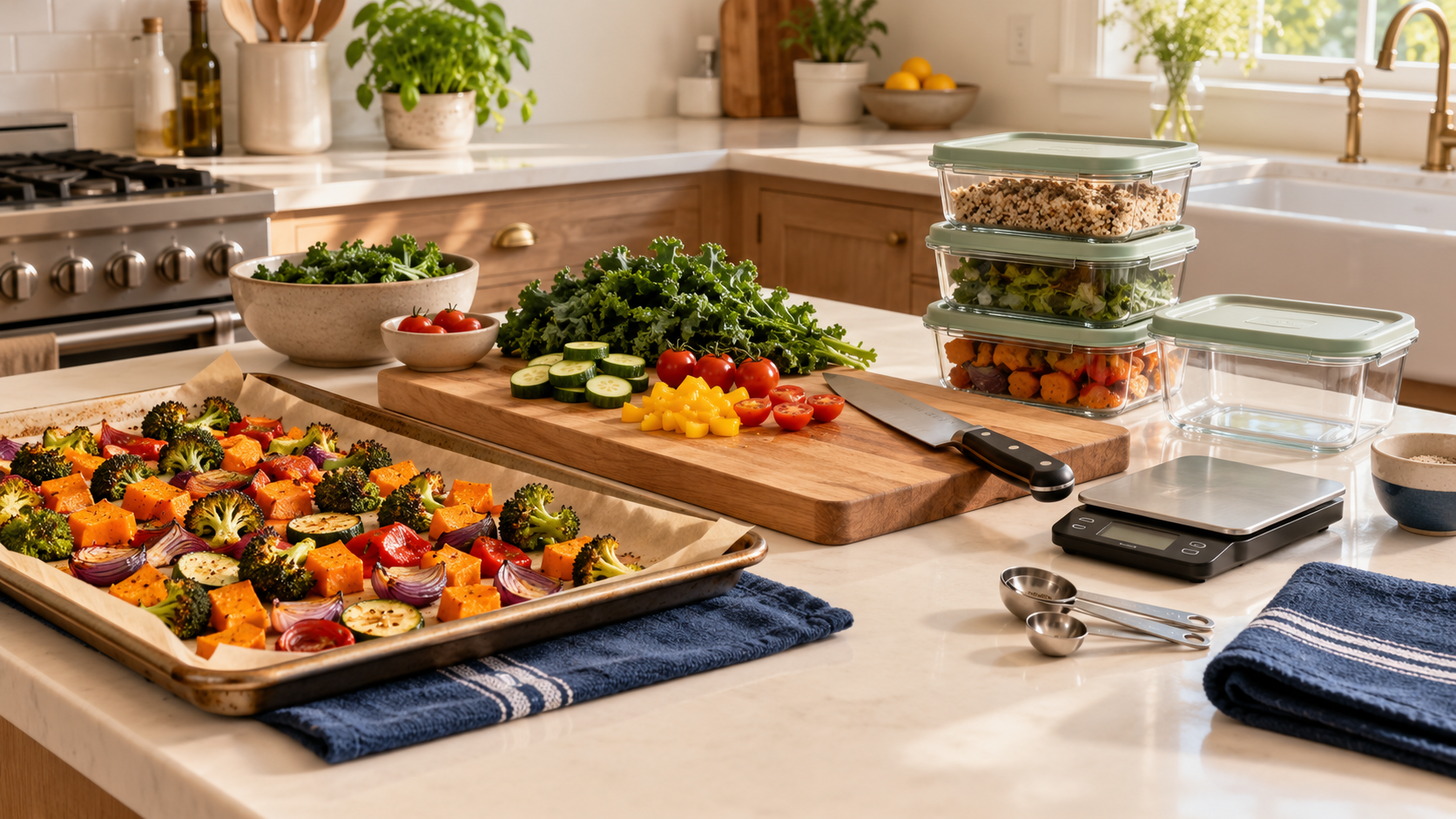
Less time. Less stress. Healthier meals. And hopefully fewer dishes.
Ever open the refrigerator, stare at what’s inside, and wonder what in the world you’re going to make for dinner?
You’re not alone.
Between work, school, kids’ activities, and everything else on the schedule, putting together a decent meal can sometimes feel like one more chore.
And when you’re hungry, tired, and staring at a pile of vegetables that need chopping, ordering pizza starts sounding pretty reasonable.
The good news is that meal preparation doesn’t have to be complicated.
Having the right kitchen tools can save time, reduce frustration, and make cooking at home more manageable.
You don’t need a kitchen full of expensive gadgets, either. In fact, some of the most helpful tools are surprisingly simple.
Here are 10 kitchen tools worth considering.
1. Chef’s Knife
A good chef’s knife might be the most useful tool in your kitchen.
From chopping vegetables and slicing fruit to preparing meat and mincing herbs, a dependable knife handles a remarkable number of everyday jobs.
A sharp, comfortable knife also makes food preparation easier and gives you better control than struggling with a dull blade.
What to look for:
- A comfortable handle with a secure grip.
- A blade that’s easy to control.
- A size and weight that feel comfortable in your hand.
- Durable construction that can be maintained and sharpened.
You don’t necessarily need an expensive professional knife. A well-made, affordable chef’s knife can serve you for years.
Quick tip: Keep your knife sharp, use a stable cutting board, and store the blade safely. A dull knife that slips is nobody’s idea of a good dinner experience.
2. Cutting Boards
Cutting boards are one of those everyday kitchen essentials that don’t get much attention until you find yourself trying to chop an onion on a plate.
Having a few dependable cutting boards makes food preparation simpler and more organized.
We especially like the idea of keeping separate boards for different jobs, such as raw meat and fresh produce.
That helps reduce the risk of cross-contamination.
What to look for:
- A stable, nonslip surface.
- Enough room for chopping ingredients.
- A material that’s easy to wash and maintain.
- More than one board so you can separate food preparation tasks.
Quick tip: A cutting board that slides around the counter is an accident waiting to happen. Use a nonslip mat or another appropriate stabilizer underneath if necessary.
3. Food Storage Containers
If you’re going to spend time preparing meals in advance, you need somewhere to put everything.
That’s where good food storage containers earn their keep.
They’re useful for leftovers, lunches, chopped vegetables, portioned ingredients, and meals you prepare ahead of time.
Stackable containers can also help keep your refrigerator from turning into a collection of mystery bowls covered with aluminum foil.
What to look for:
- Secure-fitting lids.
- Stackable sizes.
- Food-safe materials.
- Containers suitable for the refrigerator, freezer, or microwave according to the manufacturer’s instructions.
- Shapes that fit your storage space.
Quick tip: Label prepared food with the date. It’s much easier to use leftovers when you actually know how long they’ve been in the refrigerator.
4. Digital Kitchen Scale
A digital kitchen scale is useful for more than baking.
It can help measure ingredients accurately, divide recipes into portions, and reduce the need to dirty multiple measuring cups.
For people who follow recipes closely or prepare meals in batches, a scale can be surprisingly convenient.
What to look for:
- Easy-to-read display.
- Simple unit conversion.
- A tare function to reset the measurement after placing a bowl on the scale.
- A surface that’s easy to clean.
Quick tip: Place an empty bowl on the scale, press tare, and add your ingredient. It’s a small feature that can save time and cleanup.
5. Sheet Pans
We use sheet pans every day.
Sometimes the easiest dinner is the one that mostly cooks itself.
Sheet pans are terrific for roasting vegetables, preparing proteins, and cooking several ingredients in the oven.
You can chop your ingredients, season them, spread them out, and let the oven handle much of the work.
Just make sure foods with different cooking times and safe internal temperature requirements are prepared appropriately.
What to look for:
- Sturdy construction.
- A size that fits your oven.
- Raised edges to help contain juices.
- A surface that’s easy to clean.
Quick tip: Don’t overcrowd the pan. Giving ingredients enough room can help them roast rather than steam. Put parchement paper down first then cleanup is easy!
6. Vegetable Chopper
If chopping onions, peppers, carrots, and other vegetables takes forever, a vegetable chopper might become one of your favorite kitchen tools.
Many models use a manual press or lever to cut ingredients into smaller, more uniform pieces.
They’re especially helpful when preparing vegetables for soups, salads, casseroles, or larger batches of meals.
What to look for:
- Sharp, durable cutting blades.
- A stable base.
- An effective safety guard.
- Components that are easy to disassemble and clean.
- A container large enough for your usual recipes.
Quick tip: Consider how difficult the chopper is to clean before buying one. A gadget that saves five minutes chopping but takes 15 minutes to wash isn’t much of a bargain.
7. Measuring Set
Measuring cups and spoons aren’t exciting, but they’re reliable little workhorses.
Whether you’re preparing a recipe, measuring baking ingredients, or mixing a homemade sauce, a complete measuring set helps take the guesswork out of cooking.
For everyday use, a simple set may be all you need.
What to look for:
- Clearly marked measurements.
- Durable materials.
- Easy-to-clean construction.
- Cups and spoons that store neatly together.
Quick tip: Keep measuring tools in one designated drawer or container. Spending five minutes looking for the quarter-teaspoon isn’t exactly efficient meal prep.
8. Slow Cooker
A slow cooker can be incredibly convenient for busy households.
Soups, stews, shredded meats, chili, and other one-pot meals can often be prepared with relatively little hands-on work.
For families with packed schedules, being able to prepare ingredients ahead of time can make dinner considerably easier.
What to look for:
- A capacity appropriate for your household.
- Simple temperature controls.
- A removable insert that’s easy to clean.
- A reliable lid and convenient handles.
Always follow the recipe and appliance instructions for safe cooking temperatures, food preparation, and handling.
Quick tip: Set up your ingredients the evening before and refrigerate them safely. In the morning, you’ll have fewer steps between you and a meal that’s ready later in the day.
9. Blender
A blender can do more than make smoothies.
Depending on the model, it can help prepare sauces, dressings, soups, and other blended ingredients.
It’s also useful for mixing fruits, yogurt, and other smoothie ingredients when you need a quick breakfast or snack.
What to look for:
- Enough power for the foods you’ll prepare.
- A container size that fits your needs.
- Controls that are simple to operate.
- Parts that are easy to wash.
Quick tip: Portion smoothie ingredients into freezer-safe bags or containers ahead of time. When you’re ready, you’ll have less measuring and preparation to do.
10. Reusable Freezer Bags
Reusable freezer bags can help organize ingredients, store portions, and reduce reliance on disposable bags.
They’re especially handy for portioning ingredients before freezing them.
You can use them for chopped vegetables, fruit, or other foods, provided the bags are designed for that use.
What to look for:
- Food-safe materials.
- Secure seals.
- Freezer compatibility.
- Easy cleaning and drying.
- Sizes that work for your household.
Quick tip: Label bags with the contents and date. Freezer organization gets a lot easier when you don’t have to guess whether a bag contains strawberries or tomato sauce.
The Extra Mile: Your 20-Minute Kitchen Meal Prep Reset
Having the right kitchen tools helps, but having a simple routine makes those tools even more useful.
Here’s a practical way to get started.
First 5 minutes: Make a plan
Choose two or three meals you’d like to prepare for the coming week.
Check your refrigerator, freezer, and pantry before making a grocery list.
Next 7 minutes: Prepare ingredients
Wash produce, gather utensils, and chop or portion ingredients you’ll need.
Separate raw meat from foods that won’t be cooked, and clean preparation surfaces appropriately.
Final 8 minutes: Organize and store
Place ingredients into appropriate containers, label them, and refrigerate or freeze perishables promptly.
Finish by putting tools away and cleaning your preparation area.
Don’t worry if your first attempt takes longer than 20 minutes. The idea is to develop a manageable routine, not race the kitchen clock.
Free download: Kitchen Meal Prep — Your Extra Mile Checklist
The downloadable checklist includes all 10 kitchen tools, a short preparation plan, and space to write down the meals you’re preparing.
Final Thoughts
Meal preparation doesn’t need to involve complicated recipes, fancy appliances, or spending your entire Sunday in the kitchen.
A few dependable tools and a little planning can make cooking feel much less overwhelming.
You don’t have to buy everything on this list, either.
Start with the basics. Consider which tasks take the most time in your kitchen, and choose tools that actually solve those problems.
Because the best kitchen gadget isn’t necessarily the one with the most features.
It’s the one you’ll actually use.
Command & Simplify — Practical Tools for a Simpler Life.
